



Rigor With Purpose in Middle School
As expectations begin to rise in Middle School, academic rigor also intensifies. Teachers incorporate increasingly abstract concepts at a progressively faster, developmentally appropriate pace. Homework becomes more formalized, study habits become solidified, and students’ capacity for deep understanding is expanded.
Middle School teachers combine academic rigor (the why and the how behind every new concept) with experience-based learning, purpose, and joy. As a result, classes are engaging yet rigorous, perfect for students seeking a greater challenge. Rigor with purpose in the Middle School also means that learners are expected to be resourceful, organized, and adaptable. The guided lessons of early childhood give way to multistep research projects, open-ended questions, and authentic assessments in grades five through eight.
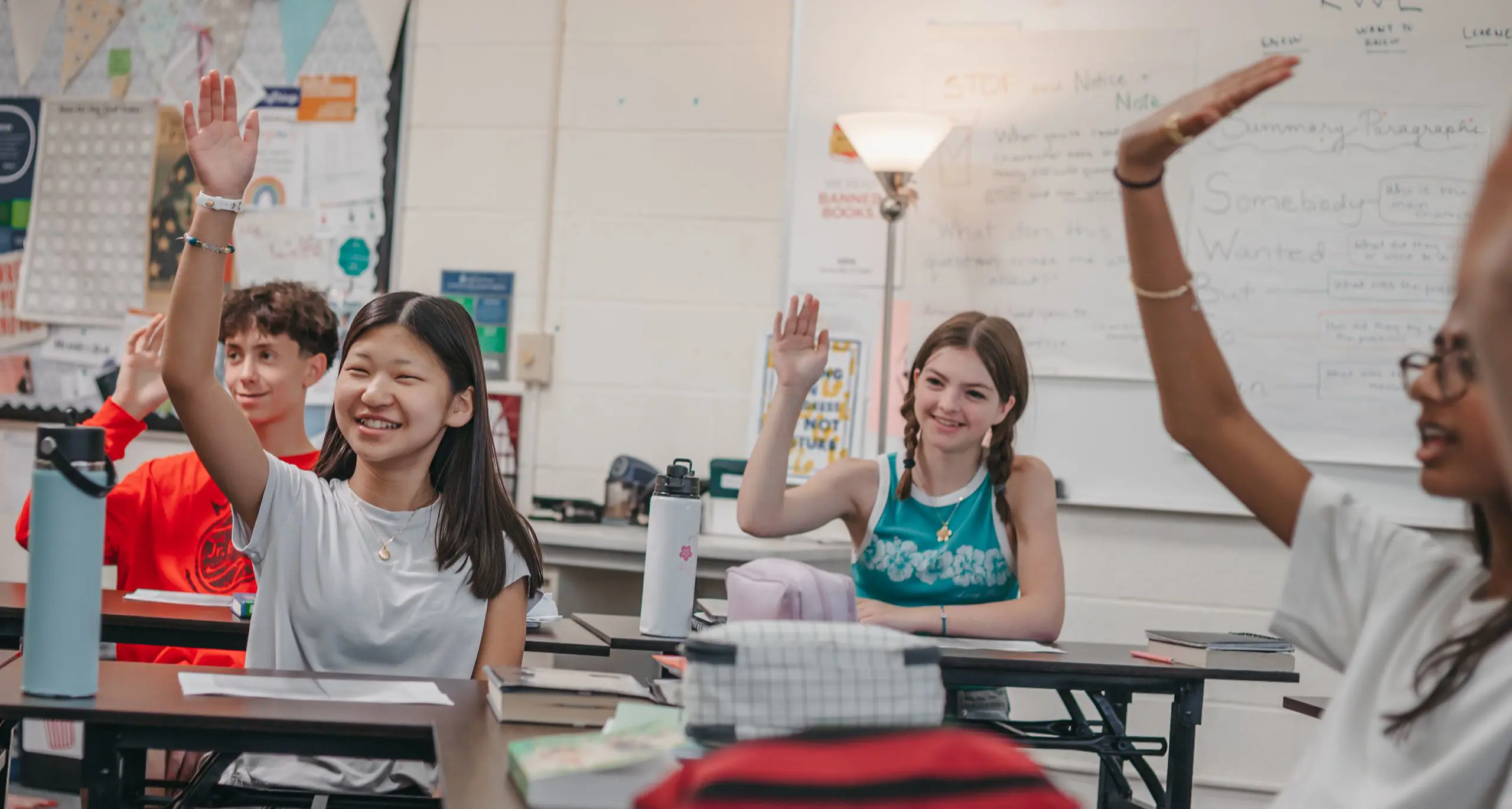
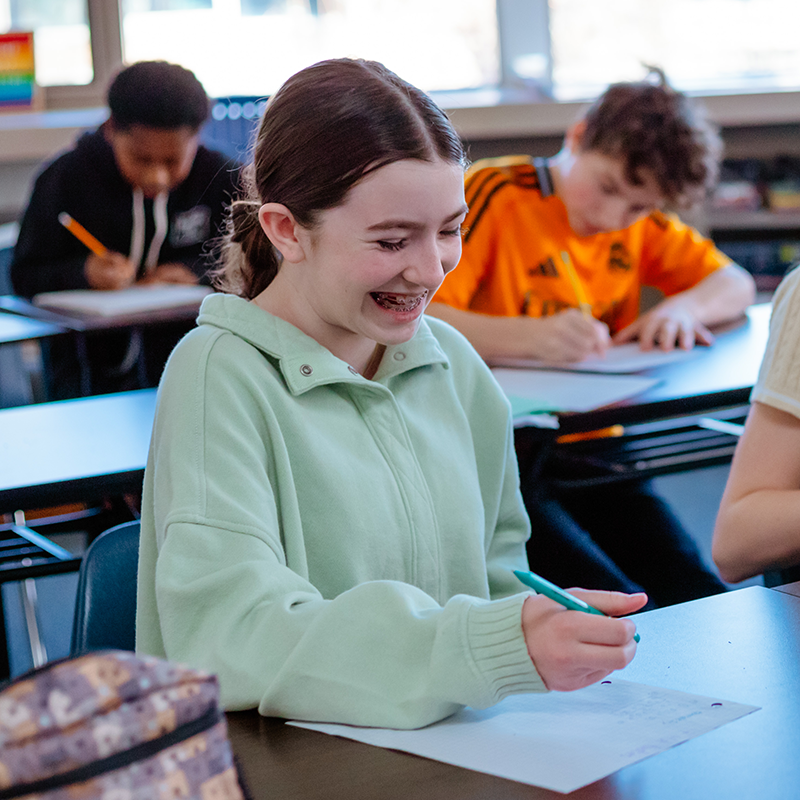
Academic rigor is evident in students’ genuine excitement about solving the challenges presented in their coursework and in their focused participation in the classroom. At MPA, teachers deliver content so that students in the Middle School are challenged, attentive, and actively engaged in their learning.
Rigor emerges in countless different ways. Some, like advanced classes (French III and Advanced Geometry for example) are the more recognizable indicators of rigor. Other ways, like i-Term courses in coding, environmental science, and design challenges through the Future Cities competition in eighth grade, or prototyping workshops in the Makerspace, are unique to MPA. But throughout the Middle School, rigor with purpose never means forcing top students to complete extra busywork, nor taking away support or individual attention from a teacher. Rather, rigor in the Middle School is about diving deeper and navigating abstract concepts.
Four Themes of Academic Rigor in Middle School
| Experiential Learning |
|---|
|
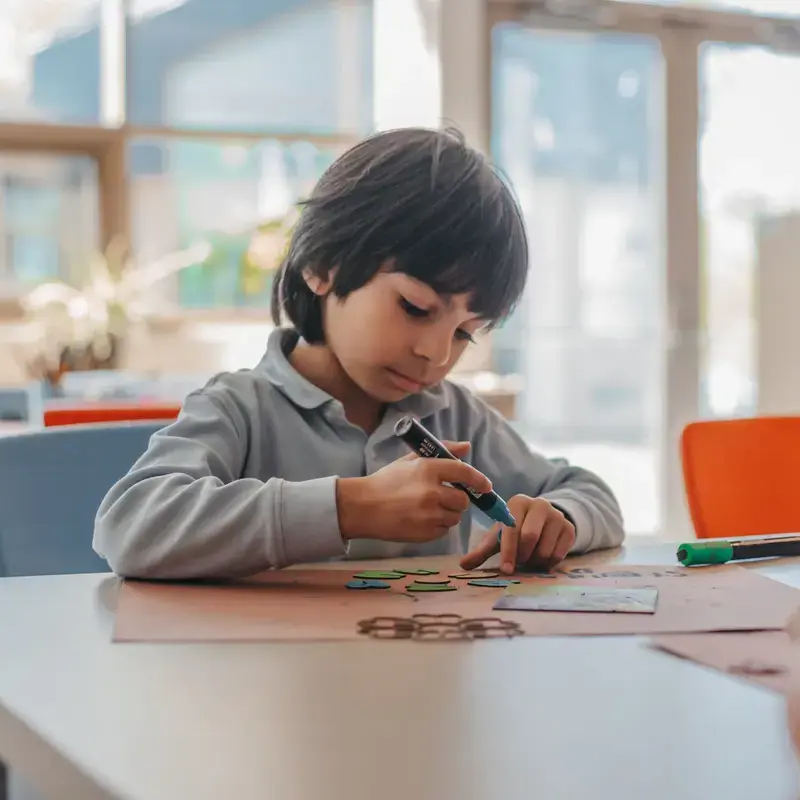
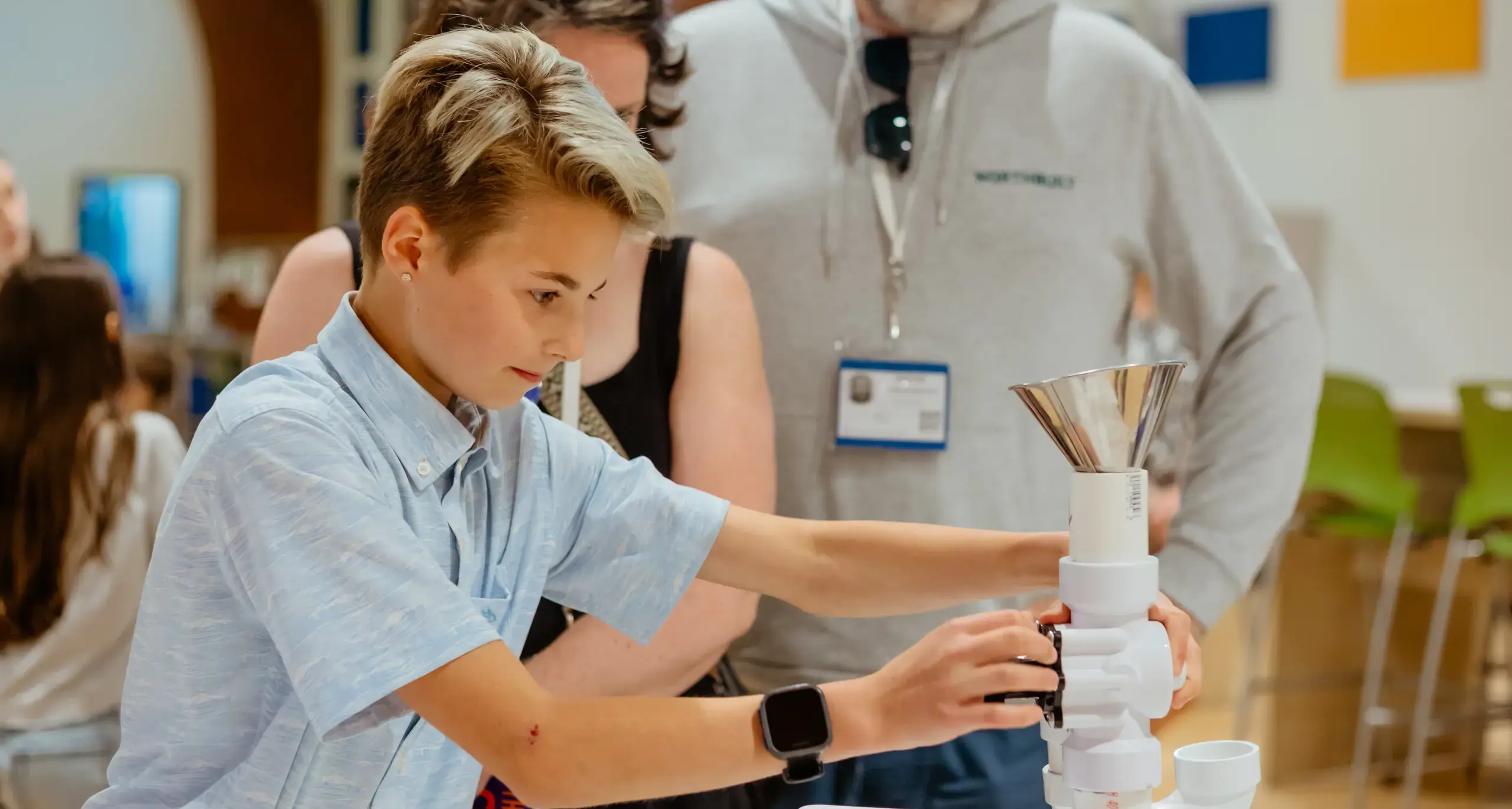
It’s no accident that the Makerspace is located in the heart of the Middle School. This space is MPA’s hub for experiential, hands-on learning, and Middle Schoolers have it right in their front yard. One way that the Makerspace delivers academic rigor is by creating opportunities for students to resolve open-ended problems as they work together to tinker, design, and prototype. Projects in the Makerspace challenge even the strongest students to become uncomfortable with the unknown and abstraction, to think theoretically, and to dig deep into their vast content knowledge to find answers to seemingly unsolvable questions. So, while rigor is of course present in accelerated math and analytical writing, our curriculum also delivers it through experiential learning, tailored perfectly for 21st-century students who are being prepared for careers and lives that will certainly look very different from our world today. That’s unique to MPA. Whether it’s an i-Term class, the Future Cities project, or Chat with the Notables, learning in the Middle School is hands-on and active, putting students in situations where finding solutions requires creativity, critical thinking, communication, and collaboration, all skills listed among Brian Miller’s 6 C’s of Education For The Future. |
| Problem Solving |
|
The Middle School curriculum is built around solving rigorous problems across science, theatre, and humanities. However, nowhere is problem-solving more prevalent or rigorous than in science and design. Middle School science teacher, Courtney Nagle, is an expert in crafting open-ended problems that require her students to apply their deep content knowledge in creative ways. Rather than giving students problems with a clear, procedural approach, Nagle opts for ones where the approach is neither obvious nor straightforward from the start. Her students work to solve real-world problems with multiple solutions rather than simply recalling scientific facts or repeating arbitrary processes disconnected from context. |
| Rising Expectations |
|
As students progress toward eighth grade, the final year before Upper School, expectations around assessment, classroom responsibility, and respectful discourse increase. It is the gentle yet firm push from teachers and classmates that prompts students to meet these growing expectations and ready themselves for the challenge and rigor of Upper School. Academic rigor in the Middle School means students are asked to demonstrate what they know in many different ways. From group projects to essays, multiple choice exams to public speaking presentations, students are authentically assessed in ways that push them to think deeply and creatively—far beyond rote memorization. With longer classes and a block schedule, Middle School students dive deeper into complex topics, and their capacity for academic endurance increases. Expectations surrounding classroom focus rise as they become responsible for fully engaging in 75-minute classes. Academic rigor means that students stay engaged, respectful, and on task, ensuring there is ample time for collaborative group work, one-on-one teacher conversations, and full-group discussion within a single class period. |
| Respectful Discourse |
|
Responsibilities regarding respectful conversation and classroom dialogue increase as rigor increases. As humanities topics grow more challenging and multiple solutions emerge in math and science classes, differing opinions begin to surface. Academic rigor means that students are taught to embrace differences, participate in debate, and engage in civil dialogue with classmates and teachers. This means that in the Middle School, classrooms look less like the “sage on the stage,” with a teacher lecturing away, and more like the “guide on the side,” with student-driven dialogue and collaboration leading to deeper content knowledge. A wide variety of viewpoints and attitudes offers the opportunity for truly meaningful collaborative work, and academic rigor means that students are asked to work with peers who bring differing perspectives, benefiting all learners in our diverse community. |
| REQUEST INFORMATION | RSVP OR tour | Apply |