
MPA Early Childhood
Originals In The Making
Before they dream big, they wonder.
About puddles and paint. Books and butterflies. Questions and possibilities. 
At Mounds Park Academy, we believe children are capable, curious, and full of possibility. The early years are a remarkable time of discovery—not only of the world around them, but of who they are and who they are becoming. MPA’s Early Childhood program provides a joyful, purposeful, and developmentally appropriate beginning to school for children beginning at age three. Here, each child is deeply known, celebrated for exactly who they are, and given the space, support, and encouragement to explore.
As the only PreK-12 school in Minnesota—and the only independent school in the state—to earn accreditation from the National Association for the Education of Young Children (NAEYC), MPA offers an exceptional early childhood experience grounded in research, developmentally appropriate practice, and the expertise of highly skilled educators.
Beginning with the 2027–28 school year, MPA Early Childhood will include two distinct classrooms designed to meet children where they are developmentally:
- Preschool: For children who turn three before the start of the school year and have one more year before kindergarten eligibility.
- PreKindergarten: For children who turn four before the start of the school year and will enter kindergarten the following year.
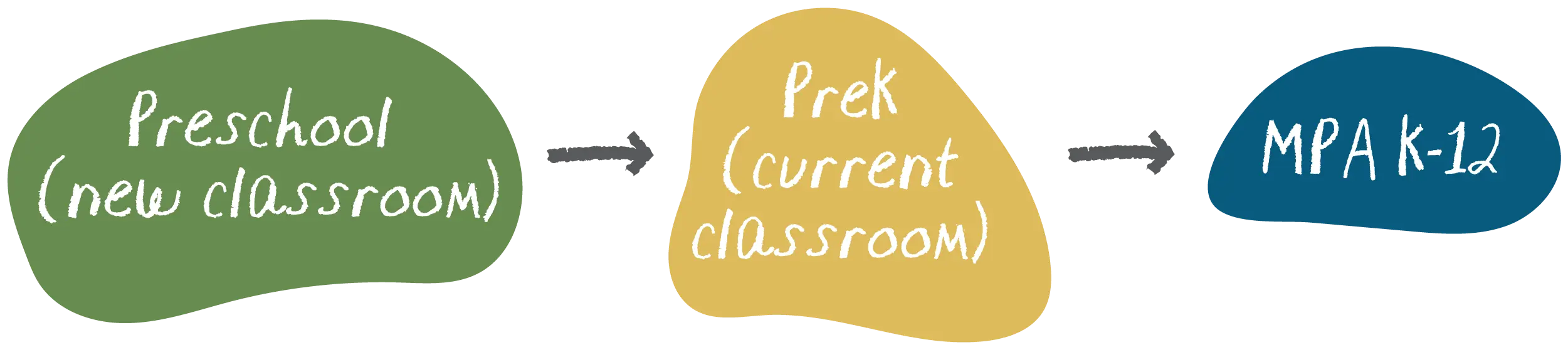
This two-classroom model allows teachers to thoughtfully respond to the interests, needs, and development of children at each stage while maintaining the warm, nurturing relationships that have defined MPA Early Childhood since its inception in 2005.
Learning Begins With Wonder
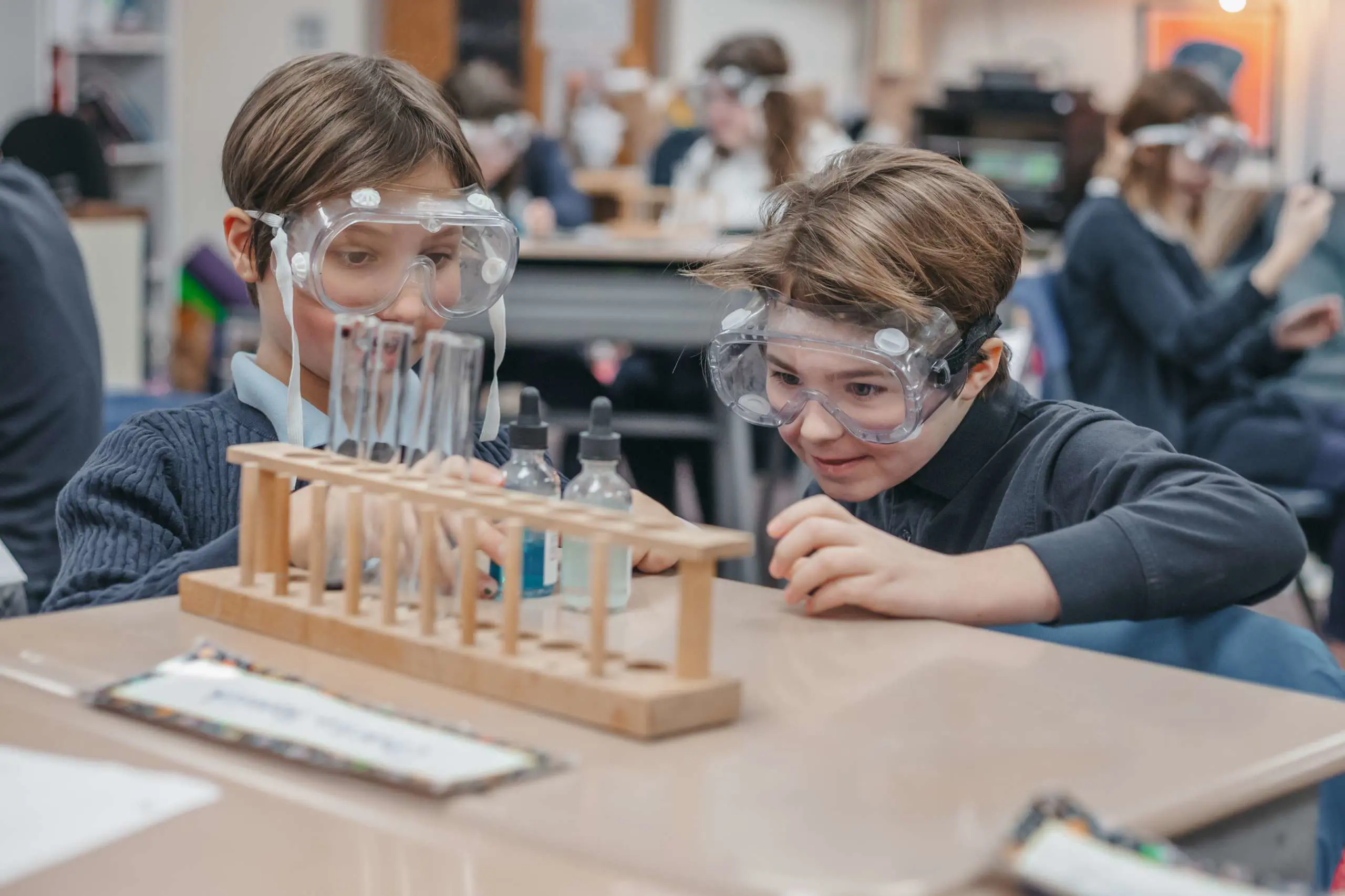
Young children learn best through play, exploration, relationships, and discovery. At MPA, they are active participants in their learning, bringing their own ideas, questions, interests, and abilities into the classroom each day. Our teachers thoughtfully balance child-led learning with intentional guidance. Children are encouraged to wonder, investigate, create, collaborate, solve problems, and take age-appropriate risks. These experiences help children make sense of the world around them while developing independence, confidence, and a genuine joy in learning.
Learning is connected and meaningful. Rather than approaching literacy, mathematics, science, the arts, movement, and social development as isolated skills, teachers bring them together through experiences that make sense in the world of a child.
And because Early Childhood is part of MPA’s vibrant PreK-12 community, our youngest learners are surrounded by something bigger from their very first day: exceptional teachers, meaningful relationships, school traditions, specialist learning, and a community where they are known and valued.
MPA’s Approach To Early Childhood Education
Rooted in MPA’s mission and designed to prepare students to "Dream Big. Do Right.," our Early Childhood program nurtures the whole child—cognitively, physically, socially, and emotionally. These principles guide the experience:
- Children are capable, curious learners. Children have ideas, questions, interests, and abilities that shape their learning. Teachers listen closely, observe thoughtfully, and create opportunities for children to investigate what captures their curiosity.
- Play is how young children learn. Purposeful play gives children opportunities to imagine, experiment, collaborate, solve problems, and make sense of their world.
- Learning is both child-led and intentionally guided. Teachers balance children’s interests and choices with purposeful experiences designed to build important knowledge, skills, and understanding.
- We nurture the whole child. Cognitive, physical, social, and emotional development are interconnected and equally important to a child’s growth and readiness for future learning.
- Every child is deeply known and supported. Warm relationships and responsive teaching help educators understand each child’s strengths, interests, needs, and development and provide the right balance of challenge, encouragement, and support.
- Confidence and independence grow through experience. Children make choices, navigate challenges, solve problems, take age-appropriate risks, and experience the pride that comes from doing increasingly more for themselves.
- Relationships and community matter. Children learn to listen, communicate, care for others, resolve conflicts, and understand their place within a community.
- Families are essential partners. Regular communication, conferences, written feedback, assessment, and student portfolios help families understand their child’s development and participate meaningfully in their learning journey.
- Our practice is grounded in early childhood research. NAEYC standards and developmentally appropriate practice provide a research-based foundation that our teachers pair with their expertise, observations, and knowledge of each individual child.
Deeply Known And Celebrated
Warm, nurturing relationships are at the heart of the MPA experience. Children learn and grow when they feel secure enough to try something new, make a mistake, ask a question, and try again. Our small, supportive learning environment allows teachers to truly know each child; their interests, strengths, personality, needs, and emerging sense of self. That understanding helps teachers create experiences that offer both the support and challenge each child needs to grow.
Families are essential partners in that process. Together, teachers and families create a community in which children know they belong and feel confident exploring who they are becoming.
"I am incredibly grateful that my child is so loved, and that she truly sees her classroom and MPA as her community. Loving a child is powerful, but having that child know and feel with certainty that they are loved? That’s a game-changer."
Caitlin Osell, MPA PreK parent
Classrooms Designed For Exploration
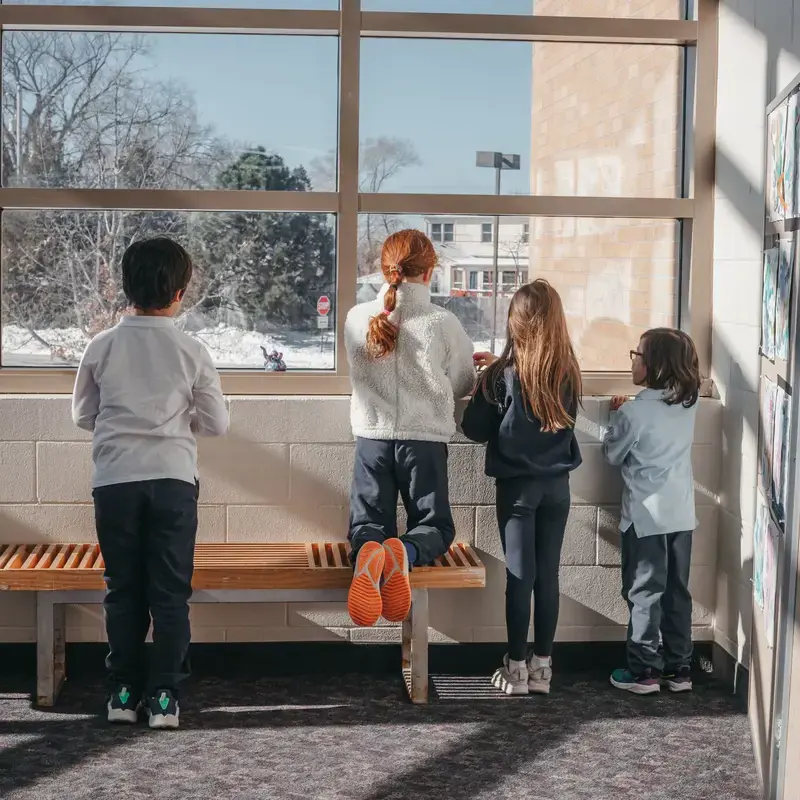
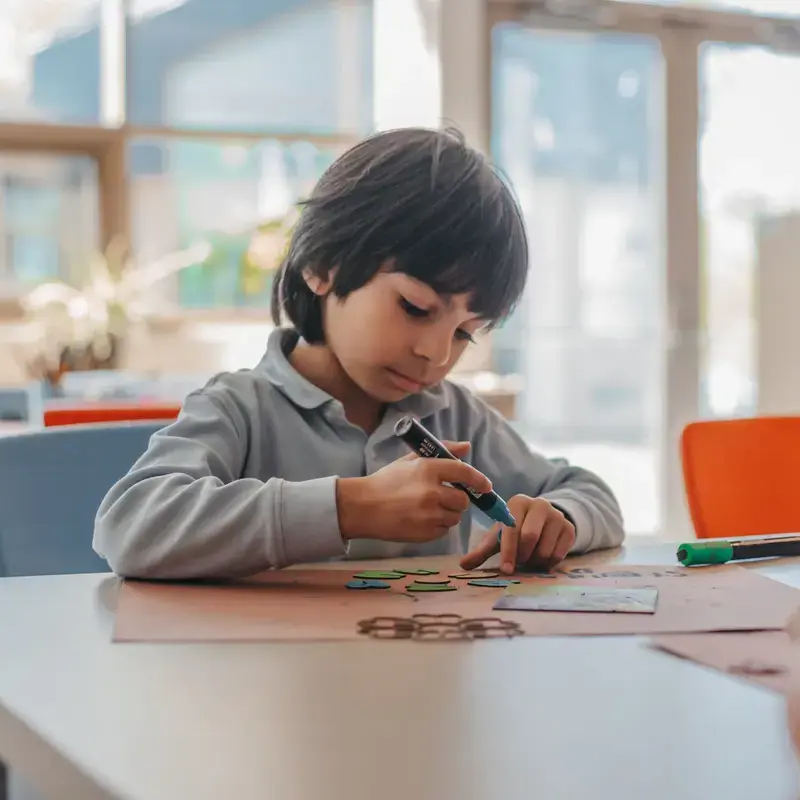
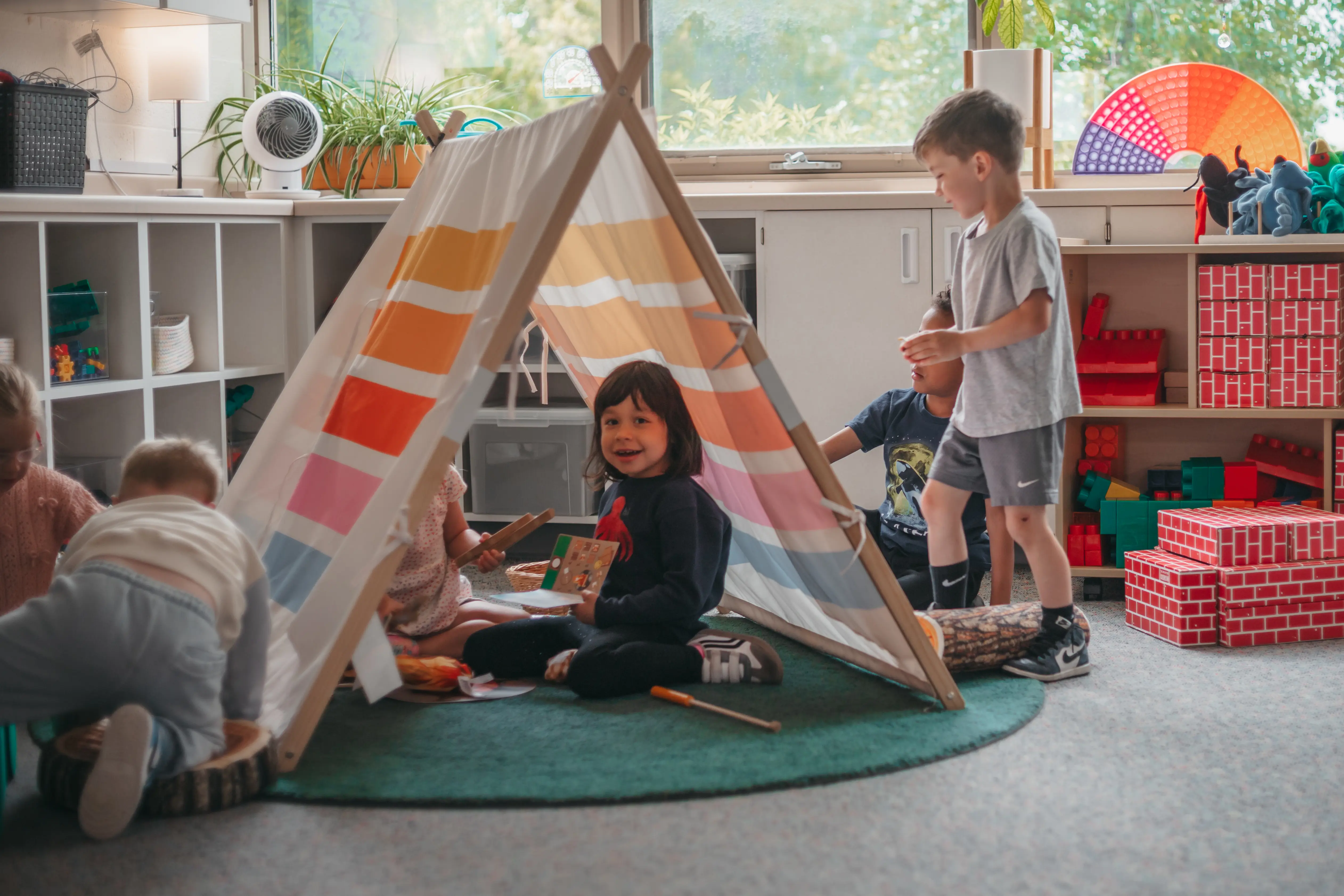
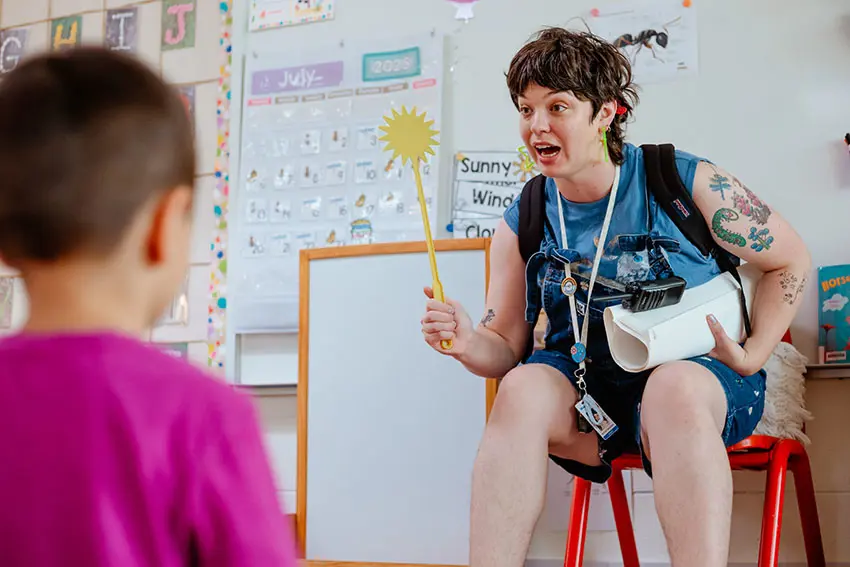
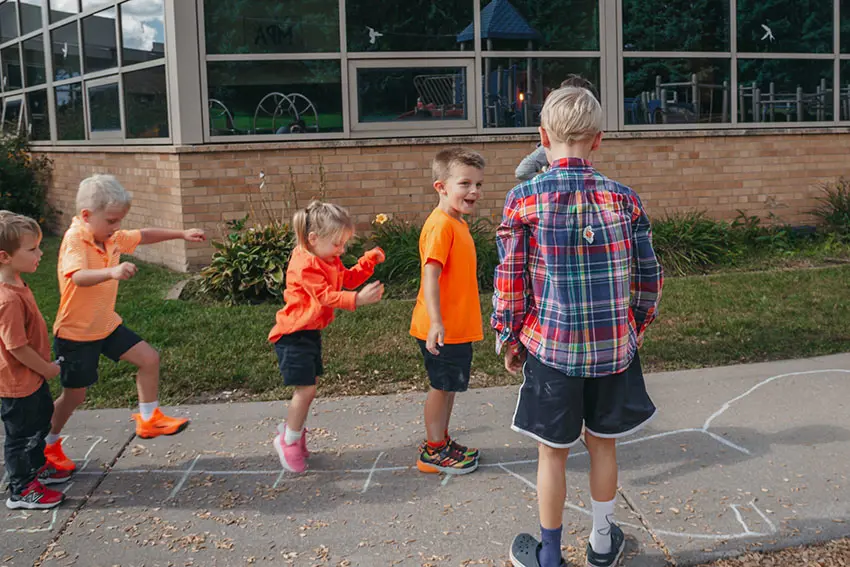
An Early Childhood classroom should invite children to wonder. MPA’s classrooms are thoughtfully designed for exploration, creativity, and movement. Learning centers invite children into art and writing, literacy, sensory experiences, dramatic and symbolic play, mathematics, blocks and building, science, music, movement, quiet reading, and both independent and collaborative learning.
These spaces evolve in response to children’s interests and development. A question can become an investigation. A block structure can become an engineering challenge. A story can inspire dramatic play, artwork, conversation, or a new question to explore. The result is an environment where learning feels active, connected, meaningful, and joyful.
The Beginning Of Something Bigger
Early Childhood at MPA is a meaningful experience in its own right and the beginning of an educational journey grounded in curiosity, confidence, connection, and purpose.
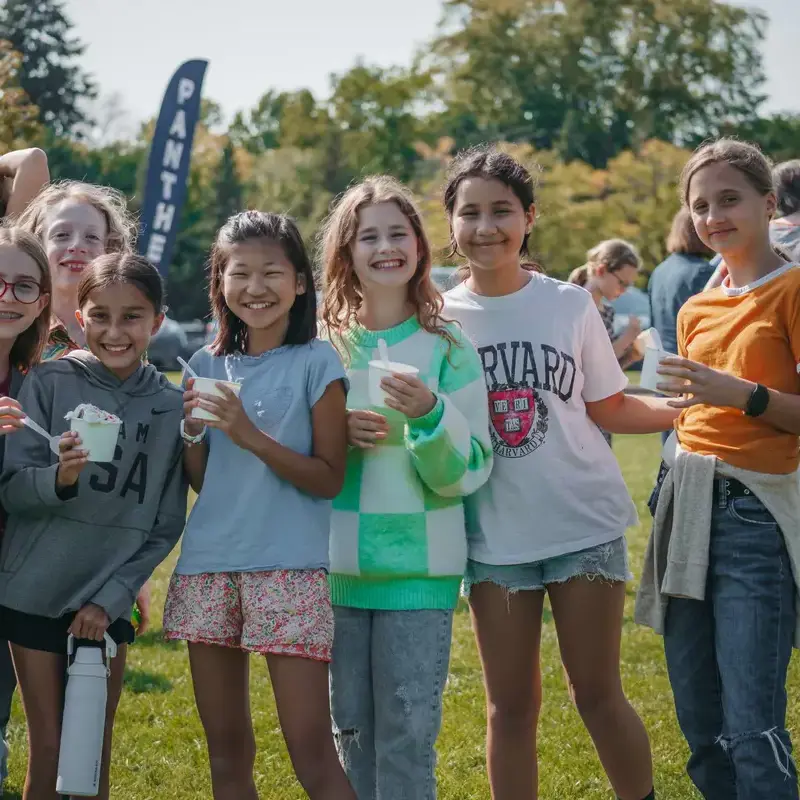
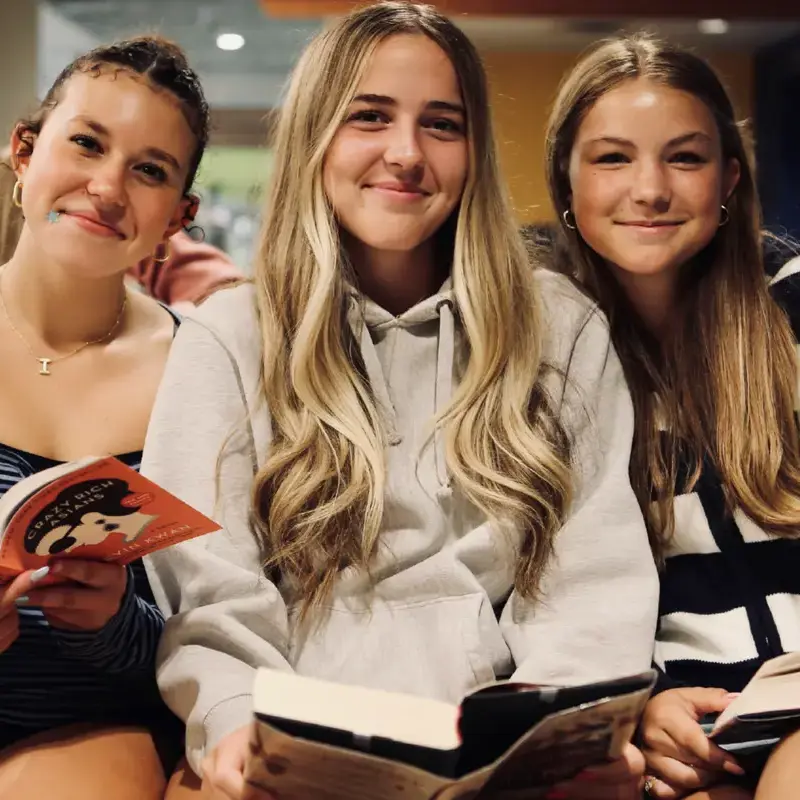
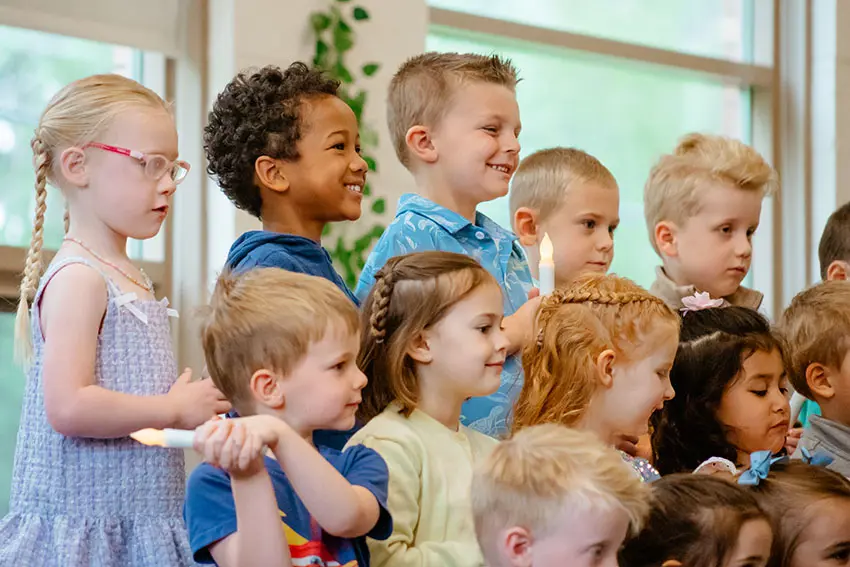
As members of MPA’s PreK-12 community, our Early Childhood students experience a sense of belonging that extends beyond their classroom. They participate in age-appropriate school traditions, Lower School gatherings, character and community-building experiences, performances, special events, and campus celebrations. Families become part of that community, too, with opportunities to connect through parent education, volunteer experiences, athletics, performing arts, the Book Festival, community events, and many of the traditions that bring MPA families together.
From their very first days at MPA, children begin developing the curiosity to ask questions, the confidence to explore their ideas, the independence to try something new, and the relationships that help them feel secure enough to grow.
Because every child is an original in the making.
| School Year Program Details |
|---|
|
MPA’s Early Childhood program features small class sizes, low student-to-teacher ratios, and the flexibility families need. Beginning in the 2027–28 school year, the program will include two dedicated classrooms: a Preschool classroom for children beginning at age three and a PreKindergarten classroom for children in the year immediately preceding kindergarten. As the program grows, MPA anticipates welcoming up to 12 students in the Preschool classroom and up to 20 students in the PreKindergarten classroom while maintaining the low student-to-teacher ratio that families expect at MPA. On average, the teacher-to-student ratio at MPA is 1:7, which is a hallmark of the independent school experience. The Early Childhood program allows for both full- and part-time students. Classes meet from 8 AM to 3 PM Monday through Friday, following the MPA school calendar. Tuition includes lunch, before-school care beginning at 7:30 AM, and after-school care until 5:30 PM, as needed by families. Financial assistance is available beginning in kindergarten. Students must be fully independent in the restroom to be enrolled in MPA’s Early Childhood program. The program is licensed by Minnesota’s Department of Human Services (DHS) Division of Licensing and evaluated in writing annually by our staff. |
| Summer Program Details |
|
Summer programming keeps the school year's small class sizes, continues the 1:7 teacher to student ratio and incorporates the same joyful, active programming offered during the school year, but with significantly more time dedicated to outdoor adventures. Students spend much of the day outside developing an appreciation for nature, building gross motor skills, engaging in social emotional growth, and honing character development, both on MPA's 32-acre campus and beyond. Summer at PreK students must be 36 months by July 1 and fully independent in the restroom. |
| Early Childhood Admission Process |
|
The preschool admission process consists of a series of steps that help us get to know students who are considering Mounds Park Academy, including recommendation forms and a campus visit. We also encourage families to join us on campus for a variety of events throughout the year, as this is the best way to learn about all the opportunities Mounds Park Academy offers. |
| Connect With Admission | Why Choose MPA | More Program Details |