May 29, 2026
 At Mounds Park Academy, we believe that student well-being is foundational to meaningful learning, healthy relationships, and personal growth. In recent years, families and schools alike have seen a significant increase in student anxiety. While anxiety has always been a part of the human experience, today’s students are navigating a uniquely complex world—one filled with constant connectivity, academic pressure, social comparison, uncertainty, and rapid change.
As educators and parents, we share a common goal: helping young people grow into confident, resilient, compassionate individuals who know how to care for themselves and others. Supporting student well-being is not solely the responsibility of schools or families alone. It requires partnership, communication, and a shared commitment to creating environments where children feel known, supported, and capable. At MPA, we take this responsibility seriously.
The Role of School
Schools play a critical role in helping students develop the emotional tools they need to navigate challenges. Academic excellence and student well-being are not opposing goals; in fact, they are deeply connected. Students learn best when they feel safe, connected, and supported. A positive school experience strengthens a student’s overall sense of well-being.
At MPA, we strive to create a culture where students are encouraged to take intellectual risks, ask for help, build healthy relationships, and develop a strong sense of self. This work happens in countless ways every day: through meaningful advisory relationships, caring teachers, developmentally responsive programming, opportunities for creativity and leadership, and intentional conversations around balance and belonging.
We also recognize that stress is not inherently harmful. Learning how to manage disappointment, navigate conflict, persevere through challenge, and recover from setbacks are all essential parts of growing up. Our role as educators is not to remove every obstacle from a child’s path, but to help students build the confidence and skills to move through those moments successfully.
This means maintaining high expectations while also creating structures of a supportive environment. It means listening carefully to students while helping them develop independence and resilience. And, it means understanding that student wellness is about more than happiness in the moment—it is about long-term emotional health and the ability to thrive over time.
The Importance of Partnership with Families
Families know their children best. Schools see students in a different context—among peers, in classrooms, on stages, fields, and playgrounds. When schools and families communicate openly and work together, students benefit from consistency, trust, and shared support.
Partnership is Especially Important when Addressing Anxiety
Sometimes, in our effort to protect children from discomfort, adults can unintentionally reinforce anxious patterns. Whether at home or at school, the goal is not to eliminate all stress, but to help students develop the capacity to manage it. Growth often comes through appropriately supported challenges: giving a speech despite nervousness, advocating for oneself with a teacher, trying something new, or working through a difficult peer interaction.
At MPA, we believe in partnering with students and families to help build these skills gradually and thoughtfully. This requires honest communication, empathy, and trust. It also requires adults to model healthy coping strategies, perspective, and balance in our own lives.
When schools and families approach challenges as partners rather than opposing forces, students experience greater stability and support.
 Creating a Culture of Connection
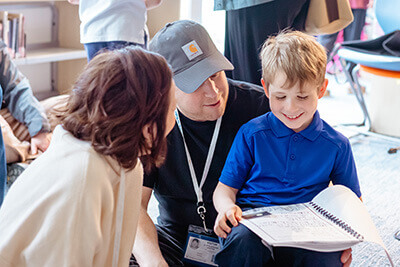
One of the most powerful protective factors for young people is connection. Students who feel known and valued by adults are more likely to seek help when they need it, take healthy risks, and develop resilience.
At MPA, relationships are at the center of our work. Small class sizes, close faculty-student connections, and a culture rooted in belonging allow students to be seen as individuals. Our teachers, advisors, counselors, coaches, and staff care deeply about supporting the whole child—not just academic outcomes.
We also believe that well-being is strengthened when students have opportunities to experience joy, purpose, creativity, movement, and community. Whether students are collaborating on a project, performing on stage, competing in athletics, exploring the outdoors, or engaging in meaningful service, these experiences help foster confidence and connection.
A Shared Commitment to Student Well-Being
Reducing anxiety and supporting student well-being is ongoing work. There is no single program or simple solution. It requires thoughtful partnership between schools and families, grounded in compassion, trust, and shared values.
At MPA, we remain deeply committed to this work because we believe our students deserve not only an exceptional education, but also the support and guidance needed to lead healthy, meaningful lives.
Together, we can help young people develop the resilience, confidence, and sense of belonging they need to navigate an increasingly complex world—not by removing every challenge, but by ensuring they never face those challenges alone.

