Parent Education With Dr. Jules Nolan

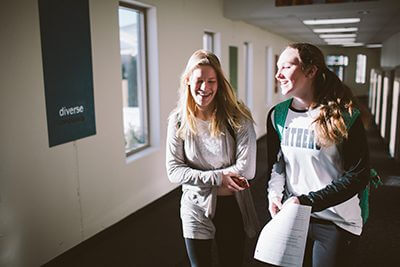
middle school girls walking into schoolThe MPA Parents Association invites parents to attend two upcoming talks by Dr. Jules Nolan. Please note that these talks are open to all MPA parents, not just Middle and Lower School. However, the Wednesday discussion will be geared toward Middle School families, so while all can attend, the content will be focused on that age group’s developmental needs.

The Middle School Parent Event is Wednesday, February 21, from 8–9 AM in the Porter Conference Room. Dr. Jules Nolan will present “Social and Emotional Learning: A Better Predictor of Success in School.” This session will explore social and emotional learning, a skill set that is foundational in learning and life, and is currently the focus of new standards and benchmarks from the Minnesota Department of Education. Participants will better understand the five areas of SEL skills and how to develop lagging skills in the areas of self-awareness, self-management, social awareness, relationship skills, and responsible decision making.

Read More


The Middle School is Full STEAM Ahead

middle school students using microscope in labby Erica Brewinski, Middle School Director

“Birthday candle smell is hot rods lab!” I’m guessing that most people, upon seeing this message in the subject line of an email, would surmise that it is: a) spam, b) a link to a funny YouTube video sent by a coworker, or c) a line from a recent late night show. For me, and all of the faculty and staff who received that message on Tuesday, the message is further evidence that our Middle School students are highly engaged in a collaborative, hands on learning experiences.

Upon investigation, I indeed found sixth grade students clustered around lab stations, talking animatedly as they tested their hypotheses. Next door, the eighth graders were working in small groups on a problem-based activity that required them to study various factors to determine the best location for a research station in Yellowstone Park. Each group then had to give a five-minute pitch to an outside scientist. These types of project-based, open-ended learning activities include real world applications and use multiple 21st century skills, and they permeate our Middle School experience. MPA is helping students to dream big and do right; our students are actively engaged in their own learning, teachers are discovering ways to weave together content from many disciplines into projects, and our classrooms have seen positive changes with the addition of our one-to-one laptop program.

Read More


Faculty Explore the 6 Cs

The 6Cs at MPA with students doing projectThe academic emphasis on only reading, writing, and arithmetic is long gone; the emphasis today is broader and more nuanced than these foundational skills encompass. Some schools, including Mounds Park Academy, are even broadening the skills identified in the “21st Century Skills” movement, commonly known as “the 4 Cs” or critical thinking, communication, collaboration, and creativity, to include two additional Cs: culture and connectivity.

At MPA, we welcome the increased focus on these critical skills, because, as a progressive and independent school, we’ve been emphasizing them since our beginning in 1982. This was long before the 21st Century was in our public consciousness. We have known for 36 years that these skills are critical for students to become engaged, thoughtful, and informed global citizens who are able to use their deep content knowledge to make a difference in their communities, in our country, and in the world.

We asked six MPA faculty members from across our community to share how they develop the 6 Cs in their students:

Thoughts on Critical Thinking from Jason Schwalen, Upper School English

In the English Department at MPA, we are creating students who are not simply critical thinkers, but informed thinkers who are willing to use those critical thinking skills to confront and solve the problems our culture has carried throughout history…attaining justice, equality, equity, and inclusivity begins with education.

In order to move our culture in a positive direction, our students need to be informed readers, critical thinkers, and skilled writers, and we build these skills by analyzing authors and artists who have attempted to document and improve our culture. Examining these authorial perspectives—and writing about them—helps create a foundation that equips our students to assess, analyze, and tackle the challenges that accompany trying to change the world. Read More


Living Lives of Health and Wholeness

MS character mixerby Dr. Bill Hudson, Head of School

Today, Middle School students met in mixed-grade level groups to explore the character trait of perseverance, a core pillar of our Middle School Character Education Program. Each group collaborated to complete two separate challenges related to fostering perseverance and then processed their experience with their teachers. Learning from failure, working together, developing skills such as persistence and tenacity were all a part of the lesson, but in the spirit of MPA, there was also a lot of joyful learning taking place.

Character education is but one part of an overall Mounds Park Academy wellness program. The MPA Strategic Plan, Momentum 2020, has as its first goal, “Empower students to live, learn, and thrive in the 21st century globalized society.” Academic and career success are important and MPA provides students a rigorous and relevant curriculum. But as a school committed to educating the whole child, we also understand that in order to reach one’s full potential, students must also have the knowledge and skills necessary live lives of health and wholeness.

Mental illness and anxiety among young people are on the rise. For instance, by the age of 18, 15-25 percent of adolescents will have experienced a major depressive episode. We also know that suicide is the second leading cause of death for Americans ages 15-34. A recent New York Times article quoted research from the Higher Education Research Institute at UCLA that found the percentage of college freshmen reporting feeling overwhelmed rose from 18 percent in 1985 to 29 percent in 2010 and surged to 41 percent last year. These facts paint a grave picture—one that illustrates clearly how critical our work is in this area.

Read More


Fostering Citizen Scientists

Student at board discussing science problemby Dr. Bill Hudson, Head of School

Just before break, the Washington Post reported that seven words were being banned from official documents being prepared for the 2018 budget at the Centers for Disease Control including “evidence-based” and “science-based.” The national conversation around “fake news” and questions about the veracity of climate change have placed science and science education at center stage. In addition, the steady drumbeat calling for more STEM education has ignited a passionate discourse about science education, particularly within a liberal arts education. In the midst of this often-polarizing discussion, I have repeatedly seen evidence that MPA does science ‘right’ by focusing on applied learning, critical thinking, and a grounding in fostering students to become citizen scientists.

The MPA science curriculum is founded on the principles of active and inquiry-based learning as first developed when the school was in its infancy. Our phenomenal science teachers continue to provide rich, thoughtful, experiences and opportunities for experimental design, while at the same time giving students the background and content they need to succeed in college and beyond. MPA students are encouraged to think critically about science by using their successes and failures in the lab as learning opportunities. What worked? What didn’t? How could it have been improved? Did it prove anything? These questions are best answered through learning by doing.

Read More


Meet Ms. Mastel

Drama teacher with her elementary classDrama Faculty
MPA Parent

What do you love about MPA?
So many things! As a teacher and a parent, I love that drama is part of the curriculum at MPA. It really shows the dedication of teaching the whole child. I also love that at MPA the “joy of learning” is imbedded into the school’s mission.

How is your child encouraged to dream big and do right at MPA?
My daughter is given options and choices for her own learning. She is taught skills that encourage independence, self-confidence, and advocacy. But the focus doesn’t stay on the individual—Lily’s teachers have projects that foster collaboration, team building, and simply being a good friend. During a recent “music share,” my daughter was nervous and forget her song … she looked at one of her friends who mouthed the first line and then Lily was ready to go. The next day, that friend began crying when a cookie fell to the ground at the school picnic and Lily immediately turned to comfort her. These are foundations that will last a lifetime.

If your child has attended another school, how has your experience at MPA been different?
Lily was originally enrolled at a different elementary school, until I was hired at MPA. I remember the moment during my tour when I started to look at the school as not just a potential teacher, but as a parent who wants the best for her child. She has more opportunities for physical education, art, drama, music, computers, and for creativity in the Makerspace. Many schools have cut art programs, meanwhile MPA has it as a required class through eighth grade. Also, the small class sizes cannot be beat! Read More


Volunteer At The Middle School Cafe!

Boys practicing at Middle School CafeThe Parents Association is looking for volunteers to help with the Middle School Cafe! This a great opportunity to help out MPA and spend some time with your middle school student.

If you would like to be a part of the Middle School Cafe planning team, please attend the meeting on Tuesday, December 12, at 8 AM in the Parents Association Room, located in the cafeteria. Please contact Ginnie Peterson at ginniepeterson@gmail.com. We hope to see you there!


“Screenagers” Viewing And Discussion

Screenagers promoHow much time does your child spend looking at screens? On average, children spend six and a half hours a day on screens, and that’s not including in the classroom or while doing homework. Do you think violent video games desensitize people to violence? Have you experienced people using screens to avoid face-to-face interactions? Does your child ever make comments online that he or she wouldn’t make in person? These are all questions that every parent struggles with and MPA would like to help better equip you to navigate this important issue.

We had so many members of our community join us for a viewing of Screenagers, followed by energetic and intriguing discussion. For those who were not able to attend, we will be hosting an additional viewing on campus on January 9 from 8-10 AM in the Recital Hall. Please join us!


“Peter Pan” Across Disciplines

students sewing together crocodile costumeThis isn’t your traditional Peter Pan! Twenty-seven Middle School actors and more than 20 students working backstage have been dedicating their time in and outside of school to concentrate on even the smallest details of costume design, set construction, and more. The sold-out production is bringing the community together in creative, challenging, and hands-on ways.

Weeks ago, before anyone knew all the words to “Neverland,” Upper School students started working with Middle School students on costumes for the cast. The kind of imagination possible through this mentorship shows the strengths of our PreK-12 community.

“Our costume crew grew from five to nine people in basically a day, and a few of them are younger siblings of my friends, so it’s cool to get to know them better,” said sophomore Solie Svennevig-Brosi. “I’m excited to make an awesome show with them!”

Read More


Halloween Reflections

Upper School Director of Mounds Park Academyby Mark Segal, Upper School Director

It is hard to believe that the annual MPA Halloween Parade is the culmination of months of planning and preparation. At some point early this past summer, my fourth-grade son, Logan, began to share with me how much he enjoys Halloween. An ardent Minnesota Vikings fan, he began to think about his costume and figured out a way to meld together his favorite Vikings player (Harrison Smith) and the Vikings mascot, Viktor the Viking. It is not about the candy, he would later share, but rather about the fun costumes that students get to wear and the high-fives he receives from the “older kids” as he follows the parade route through the building.

The all-school celebration of Halloween is one of the many school wide traditions that younger students get to share with older students at MPA. Mounds Park Academy is the only independent school in the Twin Cities that offers a PreK through 12 educational and community experience under one roof. I appreciate when prospective parents ask if being in an environment of mixed-age students is beneficial. I get to share that MPA wholeheartedly knows it is and explain the many ways in which this is the case. Being in a mixed-age community allows our students to be their best selves. Our Lower School students utilize their greatest communication skills and lessons learned from the CHAMP character education program in their interactions with older students and emulate their respectful, inclusive behavior. Our Upper School students respond appropriately to the fact that they are being carefully watched by the younger students and relish opportunities to act more child-like while still modeling appropriate behavior. And those in the middle? They find great joy and meaning through interacting with their younger friends as they look ahead to becoming campus-wide leaders as older students.

Read More