

Foundations of Joyful Learning

MPA Kindergarten: Where Joyful Learning Begins

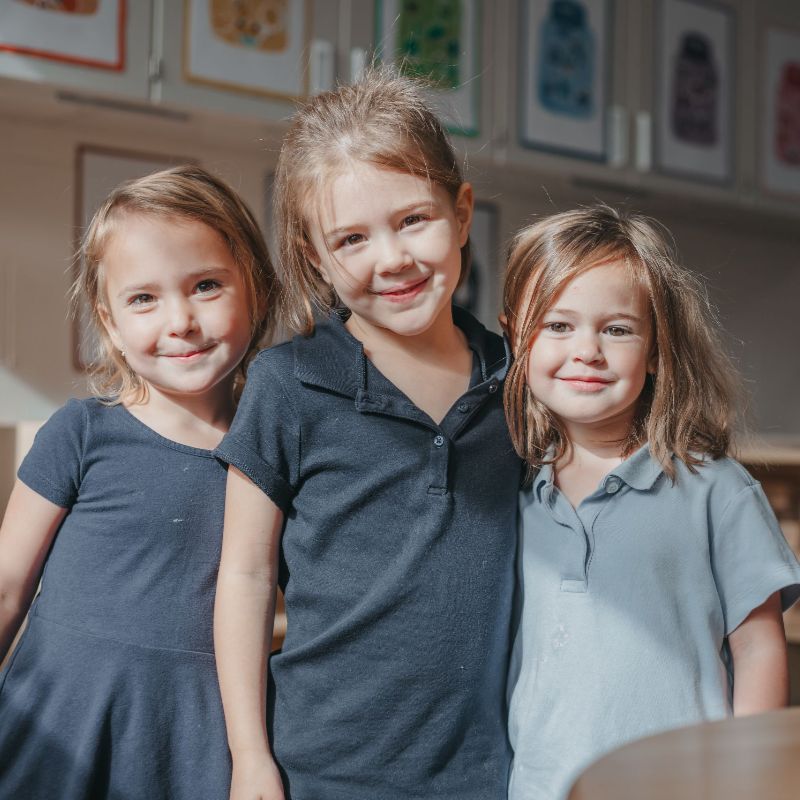
Joy is often the first thing families notice at Mounds Park Academy. It’s in the way children arrive eager for the day, in the hum of conversation coming from kindergarten classrooms, and in the confidence students carry as they move through their learning.

When asked what defines the kindergarten experience at MPA, teachers Katie Roche and Kristine Petersen both summed it up in two simple words: “pure joy.”

At MPA, kindergarten is intentionally designed as the starting point for a lifelong love of learning—grounded in curiosity, belonging, and meaningful engagement. Joy is not accidental; it is thoughtfully and purposefully built into every aspect of the experience.

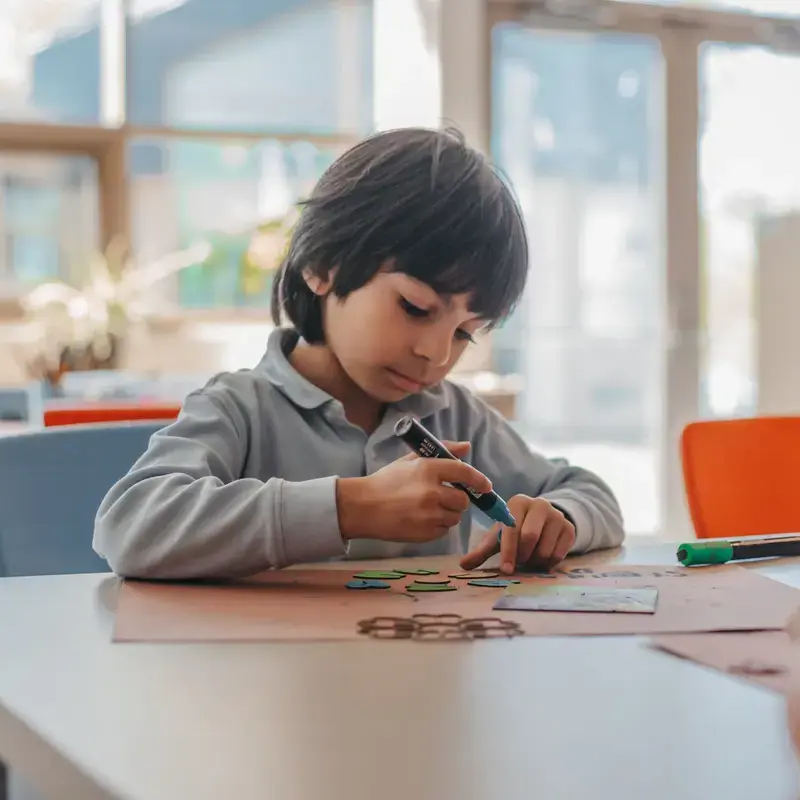
Two Kindergarteners in Art Class

How does joyful learning take shape in MPA kindergarten?

Joyful learning begins with knowing each child deeply. Teachers take time to understand each student as an individual—how they learn, what excites them, and the support they need to grow. This thoughtful attention creates a classroom environment where children feel safe, valued, and ready to take risks, both academically and socially.

Families often describe feeling an immediate sense of warmth when they enter the school. That feeling carries into the classroom, where learning is active, inviting, and engaging rather than forced or transactional. Touching, building, moving, listening, and imagining are central to MPA’s experiential approach to learning.

What does meaningful learning look like for five- and six-year-olds?

At MPA, learning reflects how children naturally make sense of the world. Rather than separating subjects into silos, kindergarteners engage with content in connected, purposeful ways. A single experience may include math, literacy, science, and social-emotional learning woven together through storytelling, problem-solving, and play.

A classroom might transform into an orchard or a marketplace, where students count, measure, create, negotiate, and reflect. Through these experiences, children are not simply absorbing information—they are actively building understanding. Concepts stick because they are rooted in experience, not memorization.

Two Kindergarten students in the garden

Why is hands-on, experiential learning essential in kindergarten?

Kindergarten students are wired to move and explore, and MPA embraces this by designing lessons that invite children to learn with their whole bodies. Students build, test, experiment, sing, draw, and collaborate daily. Learning feels joyful because it is active and engaging, yet it is also purposeful and thoughtfully planned.

While children may feel they are “just playing,” teachers are intentionally guiding academic growth in literacy, numeracy, problem-solving, and social-emotional development. This approach strengthens confidence, creativity, and the neural connections that support long-term understanding well beyond the kindergarten classroom.

How does kindergarten at MPA prepare students for future success?

The habits formed in kindergarten shape a student’s educational journey. At MPA, students begin to see themselves as capable learners who enjoy challenge and persist through difficulty. Teachers balance high expectations with compassion, ensuring that every child is both supported and stretched.

Small gaps are addressed early, allowing students to move forward with confidence. By the end of kindergarten, students are academically prepared, curious, and genuinely excited about what comes next.

Kindergarten students at an assembly with a STEM Robot

How are character and community woven into daily learning?

Joyful learning thrives in a community built on trust and care. Kindergarten students practice being safe, being kind, and doing right each day. These values are reinforced through CHAMP (Character Happens at Mounds Park), MPA’s character development program.

Students explore traits such as empathy, responsibility, cooperation, and integrity. They are given meaningful opportunities to practice these characteristics in real situations—learning how to listen, resolve conflict, and support one another. These skills are just as essential as reading and math.

What role do relationships play in the kindergarten experience?

Small class sizes allow teachers to truly know each student—their strengths, challenges, and unique perspectives. Classrooms are filled with conversation, collaboration, and shared problem-solving, allowing teachers to tailor learning experiences and ensure every child feels seen and supported.

Within MPA’s close-knit environment, students develop a strong sense of belonging. They know they matter, and that understanding fuels confidence, joy, and a willingness to engage fully in learning.

Middle Schooler reads with Kindergartener

How does MPA expand learning beyond the kindergarten classroom?

Beginning in kindergarten, students learn from specialists in music, art, world language, physical education, library, and technology. These experiences broaden students’ understanding of the world and provide additional ways to express creativity and ideas.

Learning with specialists at a young age reinforces the idea that education is expansive, connected, and full of possibility, supporting MPA’s whole-child approach to learning.

How are families part of the joyful learning journey?

MPA views families as essential partners in a child’s education. Open communication and shared purpose create a strong foundation of trust. Parents often reflect on the happiness their children feel about school, and many note they wish they could have experienced kindergarten at MPA themselves.

When visitors step into a kindergarten classroom, they see engaged learners, thoughtful collaboration, and genuine joy. Foundations of Joyful Learning at Mounds Park Academy is more than a philosophy—it is the beginning of a journey where children discover who they are, how they learn, and how they contribute to a larger community.

Families are invited to visit MPA’s kindergarten classrooms to experience joyful learning in action!

Connect with the Office of Admission to schedule a tour.


Join Us For The MPA Preview On January 22

Upper School students workin in the outdoor learning lab

The final PreK-12 Preview of the school year will take place on Thursday, January 22, from 5-7 PM, and we warmly invite you to join us on campus.

This evening event offers a unique opportunity to experience Mounds Park Academy outside the traditional school day. Guests will enjoy a guided tour of campus, connect with faculty, staff, and students, and explore interactive experiences throughout the building that reflect our academic program, student life, and community culture. A light meal will be provided, allowing families to settle in, ask questions, and enjoy a relaxed, welcoming atmosphere.

Seeing MPA in the evening offers a different perspective on our school—one that highlights the energy, warmth, and sense of belonging that define our community. Whether you are just beginning to explore independent school options or deepening your understanding of MPA, this Preview is designed to help you envision what life as a Panther could look like for your family.

RSVP today to discover why Mounds Park Academy is the #2-ranked private school in Minnesota.


Lower School Division News December 18, 2025

A Lower School student building a gingerbread house.from James Ewer, Lower School director 

As we wrap up the year, I want you to know this: We have truly seen and loved your children.
We have watched them learn and grow in real time. We have watched them take risks, make mistakes, and try again. We have heard them laugh. We have seen the tears, but hopefully not too many 😊. We have watched a frustration show up and then watched your child push forward anyway.

That. All. Matters.

This year, I have seen our littles practice compassion. I have seen them choose kindness when it wasn’t always easy. I have seen them name what they need and advocate for themselves with increasing clarity and courage. I have seen them learn how to be in community with one another. Not perfectly. But we are in fact doing it together.

I. Could. Not. Be. More. Proud. Read More


Middle School Division News December 18, 2025

A Middle School student reading her book. from Paul Errickson, Middle School director

Greetings and welcome (almost) to winter break. I would like to share some of our “happy happenings” in the Middle School over the past two weeks and one exciting change we are implementing (hint: it has to do with helping our students spend less time on their screens).

We have had a lot of fun and excitement around the Middle School over the past two weeks. Last Friday, our eighth graders met with the Upper School Peer Leaders to gain valuable insight into what is waiting for them in ninth grade. Those Peer Leaders talked about the opportunities, freedom, change in social dynamics, and responsibility that awaits in our Upper school. They also gave our eighth graders tickets to the hot cocoa bar they hosted on Monday.

Yesterday, we had a Middle School meeting in which a couple of our advisories shared their Dream Big, Do Right Challenge tasks, including a fundraiser for the Ronald McDonald House by Ms. Phillips’ advisory and Ms. Nagle’s advisory, making slime for our kindergarten Ba Ba Boutique to sell. Some of our eighth-grade students also shared advice on mindful breathing and other relaxation techniques that students can use when feeling anxious or stressed. We ended the meeting with Ms. Meras sharing that we have decided to give the students a break from their laptops as well as from school. Read More


Upper School Division News December 18, 2025

An Upper School student working with a robotfrom Mark Segal, Upper School director

As Upper School students and the MPA community head into winter break, the importance of keeping the mind active cannot be overstated. Breaks are an important and sought-after time to rest and recharge, but they can also lead to a loss of academic momentum if the brain goes entirely unused (like how a muscle atrophies when not in use). One simple and effective way to stay intellectually engaged is to follow the advice a prior school administrator regularly shared before long breaks: read for pleasure.

Reading keeps the brain active while still feeling restorative. It strengthens creativity and critical thinking skills, which are vital not only for academic success but also for lifelong learning. Reading for leisure also allows students to explore new ideas, cultures, and perspectives, broadening their understanding of the world beyond the classroom. Whether through novels, short stories, essays, or nonfiction, reading invites us to step into different experiences and develop empathy by seeing the world through the eyes of others.

In addition to these cognitive and emotional benefits, reading for pleasure naturally supports vocabulary growth and stronger writing skills. Exposure to diverse voices, styles, and structures enhances students’ own communication abilities in ways that feel organic rather than instructional.

Each year, well-respected educator, former principal, and educational consultant Kim Marshall shares a thoughtfully curated list of “best books,” drawing on recommendations from “the School Library Journal.” The list includes a wide range of genres and reading levels, ensuring there is something to spark interest for every reader. Families and students can access the list here. Read More


NEW! MPA Ski & Snowboard Club

MPA skiers at the Afton Alps We are very excited to announce MPA’s Ski & Snowboard Club for grades seven through 12 at Afton Alps! If 15 students—who don’t already have season passes—sign up, we will be eligible for Ski Club discount tickets. If we can hit our goal, lift tickets will be $39 and rentals will be $37. Click here to sign up!

We plan to go every other Friday, after school. Students and families will need to provide their own transportation. Permission forms are available for anyone who would like to coordinate a carpool.

Waivers and rental forms must be completed in advance. Please fill out these forms and either send them to Sean Andrews at sandrews@moundsparkacademy.org or drop them off in the tech office on campus.

If you have any questions, please reach out to Sean Andrews at sandrews@moundsparkacademy.org!


Join Us For MPA Family Open Gym!

A Lower School student with a basketball in the Lansing Center.

We are excited to welcome back the MPA Family Open Gym—a long-standing tradition returning for the first time since before the pandemic! Please join us on January 11, January 18, January 25, and February 8 from 1-3 PM in the Lansing Sports Center for one or more of the open gyms. Click here to register!

Important Notes:

  • Arrive between 1-1:15 PM at Door 7 on the north end of campus. Doors will be locked outside of the arrival window, and fobs will not work.
  • Please wear your MPA nametag or bring an ID to check in and receive a name tag.
  • Supervision will not be provided. Upper School students may attend on their own, but Lower and Middle School students must attend and remain with a parent or guardian.
  • More concession stand volunteers are needed. Sign up here!

We look forward to gathering together for an afternoon of fun and community. We hope to see you there!


Congrats, SAGE Dining Team!

The Mounds Park Academy dining staffThe MPA SAGE dining team has earned FARECheck Silver certification through FARE-approved Serve It Safely training, a nationally recognized mark of excellence in food allergy awareness and safety.

FARE (Food Allergy Research & Education), the leading nonprofit dedicated to food allergy education and advocacy, carefully reviewed and validated the training completed by our team. This certification confirms that MPA’s dining practices meet best-in-class standards for allergen safety and food service compliance!

This achievement reflects more than just a completed training—it speaks to the kitchen team’s daily dedication to creating a safe, welcoming, and exceptional dining experience for every student, faculty member, and staff member, especially those navigating food allergies. We are incredibly proud of their commitment to our community each day. Congratulations to our MPA dining team!


MPA Robotics Teams Inspire Future Innovators

Upper School Students with a robot

From Lower School to Upper School: A Week of Code

MPA’s school-wide, week-long participation in Hour of Code was a tremendous success! Throughout the week, students across all grade levels explored computer science through a variety of interactive platforms—building characters, games, and puzzles while learning the fundamentals of coding. Hour of Code is an international initiative that aims to make computer science accessible to all learners and to spark curiosity about the ways technology shapes our world. For some Lower School students especially, this was their first opportunity to experience coding.

Robotics Teams Showcased Robots In Action

Adding to the excitement, the MPA Robotics Team hosted the first-ever Lower School Robotics Assembly. Initially founded in 2011 by former MPA teacher and Makerspace coordinator Ms. Nicole Koen. In 2014, Mr. Marc Shapiro, Upper School Physics teacher, became the coach. His leadership and student involvement have grown steadily over the past 15 years to include both Middle and Upper School teams. Each season, students collaborate with mentors to design, build, and program a robot to meet a unique set of challenges before competing with and against teams from other schools.
During the assembly, both teams showcased their robots in action, much to the delight of the Lower School audience. Using game pieces and designs from previous competitions, they demonstrated precision, creativity, and teamwork in motion.
Instructor with small robot and upper school student giving a speech
Each team is made up of subgroups that focus on design, programming, building, and operations, and students devote many hours each week during the six-week build season preparing for competition. Their dedication, innovation, and collaborative spirit exemplify MPA’s mission to combine creativity, problem-solving, and purpose in learning.

  • The Middle School team, the Gentoos, competes in the FIRST Tech Challenge, designing a robot that must fit into an 18×18-inch box.
  • The Upper School team, the MPArors, competes in the FIRST Robotics Competition, designing, programming, and building a robot weighing roughly 115 pounds.

At MPA, curiosity and innovation begin early. From coding in the Lower School to advanced robotics in the Upper School, students are encouraged to dream big, think boldly, and bring their ideas to life.

Follow the MPArors to see their progress and upcoming events:


Then & Now: Connections To The Past And Present

Students in the Nicholson Center celebrating. From George Mills ’04

It’s hard to believe we’ve already made it to December 2025—and that winter has arrived overnight in all its cold, snowy glory. The first snowfall has always felt magical to me, and it recently brought back a memory from my eighth-grade year.

I remember being dropped off by my dad along a sidewalk that no longer exists, walking through the atrium with the blue glass—back when it was still an entrance—and being greeted by the sound of a girls’ quintet singing. It was such an uplifting way to start the day.

That small moment made me reflect on how much MPA has changed… and how much has stayed wonderfully the same. After spending several years away and now returning as both an alum and a parent, I find myself noticing the pieces of MPA that still feel familiar. For example, there’s a vase Ms. Petersen uses that I immediately recognized from Ms. Buck’s ceramics studio—now occasionally brightening the Lower School hallway.

So much life happens in these hallways, even in the small in-between moments we don’t always think about. Just the other day, I was waiting outside the band room for my kindergartner to finish a piano lesson when Marisue Gleason walked by. We ended up chatting right there in the “T” at the end of the main hallway—you know the one. It was not only fun to reminisce about being her Spanish II student back in 2001, but also to reconnect in a spot that has hardly changed at all.

MPA is full of these quiet threads that weave our past with our present—little tributes and familiar touches mixed in with all the ways the school continues to grow. If you haven’t been back in a while, I hope you’ll stop by for a visit. Take a self-guided tour or walk with one of our wonderful colleagues in admissions or development, and see what memories stir for you.