January 22, 2025
 This message is from MPA’s Office of Admission from the January 22 issue of Inside MPA. Click here to get in touch with Admission and learn more!
The full-circle moment of welcoming alumni back when they bring their own children to MPA is very special. As such a young school, we’ve started to see an upward trend of alumni bringing their children to MPA in recent years. And because the fabric of our alumni community is so unique, we hear a lot of different reasons why; joyful memories of their time here, aligning values, an overall feeling of home, and crediting MPA for preparing them for the world.
“A lot of who I am and who I came to be started in this building and continues to stay with me today,” says Spencer Butts, a class of 1999 MPA alum. “I’ve seen both of my boys, since they’ve been at MPA, learn better study habits and learn how to challenge themselves without being prompted. I think their self-confidence–socially and academically–has changed and improved. MPA really beautifully walks along that fence of making sure that students understand that rigor is an important part of life. But, I think it’s also understood that you have to be able to understand failure to succeed at the end of the day.” This is why Spencer chose MPA for his children.
Like Spencer, our alumni have had transformative experiences at MPA, and they want their children to benefit from the same environment that shaped their own growth–both academically and personally. Alumni returning, and bringing the next generation with them, reflects the lasting impact MPA strives to have on students for a lifetime.
 This message is from MPA’s Office of Admission from the January 8 issue of Inside MPA.
 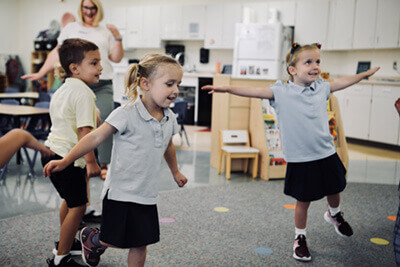 When parents are just beginning to explore early childhood and kindergarten programs for their children, many questions are at the forefront of their minds. Will their child be safe and nurtured but also challenged? At MPA, the answer would be ‘yes’ to these questions. However, parents also question what institutes the proper amount of academic rigor for five to six-year-olds and ask what this rigor should look like in kindergarten.
 This message is from MPA’s Office of Admission from the December 21 issue of Inside MPA.
  This message is from MPA’s Office of Admission from the December 11 issue of Inside MPA.
 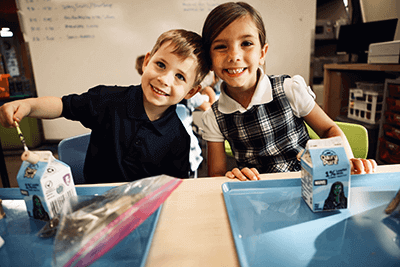 What makes a strong kindergarten program? How do you know what will be a good fit for your child? Should you find a program that focuses on academics, play, or one that promotes both? Is a public elementary school the right choice or a private one with smaller kindergarten class sizes?
 “I’m living the dream every day,” remarks kindergarten teacher Katie Roche. “Not only do I have the honor of helping our kindergarteners grow into readers, mathematicians, scientists, and historians, I have the privilege of helping them learn to love school and truly love learning. That is the feeling we want them to have walking in through the front door every day, and to be carried with them even as adults.”
 One of the most frequent questions asked of our admission staff when families are first exploring our school is, “Tell me about homework” or “How much homework do students have at Mounds Park Academy?” MPA’s philosophy is that homework should always affirm and confirm what students have learned in the classroom. In other words, homework assignments should be about practice. When homework is designed this way, it leads to students taking responsibility for their assignments because they understand how to approach it. Our end goal is that students will find motivation within themselves to succeed. We also work to teach our students balance. We want them to be able to focus on their academic achievements, but also be in the musical, or play soccer, or participate in debate. It is important that students can handle the responsibility of homework without them drowning in it. Rigor at MPA is not the amount of homework you have or the number of hours you spend studying. Rigor at MPA is a deep and meaningful inquiry.
 This message is from MPA’s Office of Admission from the November 8 issue of Inside MPA.
  This message is from MPA’s Office of Admission from the October 26 issue of Inside MPA.