March 9, 2021
 MPA’s international program welcomes students in grades 7-12 from a number of countries and backgrounds. Here are 10 things to love about the international program at MPA:
1. International Student Program Coordinator Mr. Becker-Kim: MPA has a dedicated International Student Program Coordinator, Cory Becker-Kim who serves as an advisor, teacher, and confidant to all international students on a daily basis, and regularly monitors their academic achievement. Given MPA’s emphasis on public speaking, college preparatory writing, and higher Lexile level reading, students work through the challenging coursework in one-on-one or in small groups with Mr. Becker-Kim throughout the entire duration of their MPA experience.
2. Advanced language and culture (AL&C) Course: Taught by Mr. Becker-Kim, Advanced language and culture (AL&C) course, with a 6:1 student to teacher ratio for all international students, is built into the curriculum as a World Language credit towards graduation. First-year international students are enrolled in AL&C to help with the cultural transition to an American high school, to discuss important social and historical events of the United States and learn the nuances of strong academic English and vocabulary to achieve fluency. Click here for the Advanced language and culture (AL&C) course description.
3. College Application Support: For juniors and seniors, MPA dedicates significant time and resources to helping international students with college applications, particularly with primary college application essays and supplemental writing essays.
4. Social and Emotional Support: All international students have the International Student Program Coordinator available to help them navigate homesickness, friendships, social situations and events, stress, and culture shock. When needed, the International Student Program Coordinator works closely with the School Counselor and/or Director of Guidance to be sure the student is as happy and healthy as possible during their time at MPA. Support includes connecting international students to domestic students, faculty and administration, and co-curricular activities.
5. New International Student Orientation: This involves one-on-one meetings with the Director of Guidance to create class schedule, acclimation to classroom and school culture, laptop orientation, plagiarism discussion, school supply shopping, sight-seeing in the Twin Cities, student networking opportunities, team building activities, and more.
6. Transition Assistance: For both students coming into our community for the first time, and to assist returning students in forming connections within the school and the Twin Cities, MPA provides transition assistance in order to make an international students transition, or transition back as smooth as possible.
7. Daily Hot Lunch: Served with culturally and religiously sensitive options, daily hot lunch is delicious and unlimited!
8. Quarterly Events: Throughout the school year and the summer, MPA’s international program hosts joyful events, on and off campus, to help support new and returning students.
9. Host Family Selection, Acclimation and Support: International host families are carefully recruited, selected and vetted to ensure the highest quality experience for our students. The International Student Program Coordinator works closely with students and their host families to ensure that the home is a safe, welcoming, happy environment for all. Quarterly home visits, one-on-one check-ins with students and host families, communication with natural parents, and student/host family events are all ways that the Program Coordinator works with host families and students to build routine, communication, and a supportive experience.
10. Translation Services: MPA provides translation services for international student and/or parents. This includes both in person conversations and documentation translation for Visa and immigration support.
 Congratulations to MPA’s four Nordic Ski state qualifiers on their fantastic performances earlier this month at the MSHSL Nordic Ski Championships at Giant’s Ridge in Biwabik!
 This year’s MPA
  The Alumni Association is looking for nominees for the MPA Alumni Association Award. Do you know an alum who is dreaming big and doing right? We want to hear about them. The MPA Alumni Association Award is intended to honor alumni of outstanding talent pursuing their own creative, intellectual, and professional inclinations, while embracing the spirit of MPA’s commitment to community and social outreach. They should be real-world examples for both current students and alumni to dream big and do right. Nominations are due April 1, 2021.
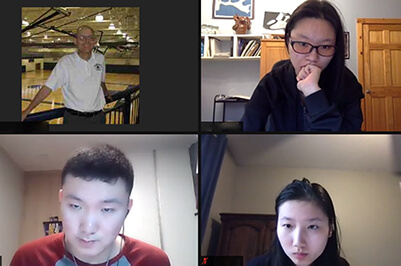 Congratulations to the MPA Math League Team! MPA finished in a tie for second in the state with Mahtomedi in Class AA at the Math League State Tournament.
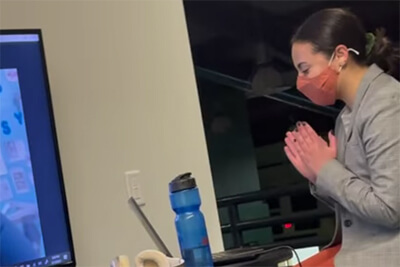 This past weekend, MPA competed at the NSDA National Speech and Debate Tournament Qualifier. MPA advanced the following two students to the semifinal round: senior Ryan Ghose in Humorous and Drama, and senior Hana Miller in Humorous and POI! Additionally, senior Salmah Elmasry qualified for the National Tournament in Extemp Speaking! MPA has one of the hardest districts to qualify out of, and Salmah advanced through most of the tournament as the #1 seed, ending in third.
 What are you currently doing, professionally and/or personally?
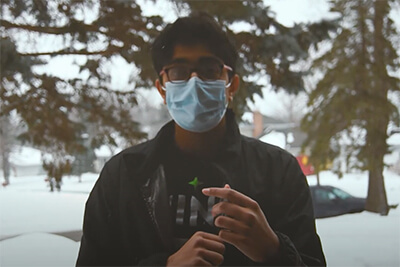 MPA ninth graders Trevor Lien and Akshay Somayajula were named finalists for the recent Minnesota Youth Council Escape the Vape video contest! Escape the Vape is a vaping and e-cigarette prevention video contest for Minnesota high school students. The top five finalists (of 110 statewide entries) were selected by the Minnesota Youth Council (MYC), a statewide group of youth leaders who work to create equitable systems through youth-led outreach, education, and advocacy.
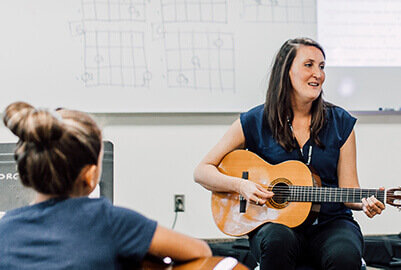 We are pleased to be offering an expanded summer program with a larger choice of academic programs, enrichment classes, athletic clinics, full and half day Panther Camp, and much more for students of all ages! As always, our goal is to provide our participants with the highest quality program in the context of a safe and healthy environment.
 Thank You!