Middle School Division News January 27, 2022

from Dr. Jenn Milam, Middle School Director

Winter Conferences Are Almost Here
Your partnership with us is an integral part of your student’s success. Most importantly, your student needs to know that you hold them accountable for being a good student academically, a caring human being and positively contributing member of our school community, and that you value and work with their teachers to help them be there best!

We are eagerly preparing for the winter conferences that are coming up next week. Please take this time to ask questions, listen with curiosity, and work to find ways that you can support and reinforce the learning that is happening at school at home–and we pledge to do the same!

Save The Date! Middle School Community Event
On Friday, February 25, we will load up five (yes, I said 5!) buses and take all middle school students to Badlands SnowPark for an afternoon of SnowTubing fun (2:30-5:30 PM)! This is not just a student event, in fact, our Middle School Parents’ Association has planned to bring a food truck, build a giant bonfire, and an event that will welcome parents, families, and siblings to the hill for fun and community time.

More information is forthcoming regarding participation release, food costs, and transportation information for both students and families. Please SAVE THE DATE on your calendar and plan to attend to meet other families, teachers, and students.

Reminder: Quarter 2 Grade Reports
Availability of grade reports for Quarter 2 was delayed from Monday, January 24 to Monday, January 30 to account for the short shift to virtual school for grades 7-12. We made the decision to allow teachers and students a bit more flexibility and time to wrap up Quarter 2. We hope that this helped to mediate any negative impact on student’s academic standings that may have happened with all the shifts in the last few weeks. Read More


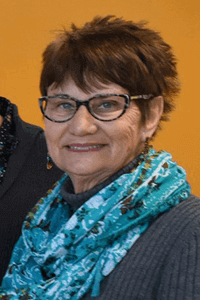
Meet Retired Faculty Member Nansee Greeley

Position while at MPA
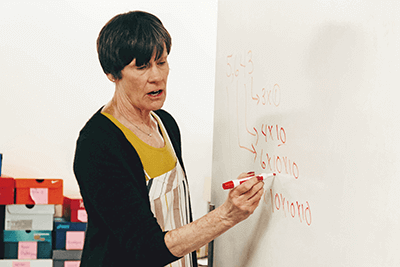
Math Teacher, asst. Middle school director, Lower School Director, Interim Head, Summer Program Director, Tennis Coach, Math Team Coach

How many years did you work at MPA?
35

What do you miss most about MPA?
The intellectual stimulation, the close friends I made over the years and of course the enthusiasm of the students.

What have you been up to since leaving MPA?
When I first left MPA I became the executive director for MAIS (Minnesota Association of Independent Schools.) I retired from that job 3 years ago. I now watch two of my grandchildren 2 days a week, play golf and pickleball and travel. We spend our winters in Palm Springs near our LA grandchildren.


Building Early Childhood Skills During the COVID-19 Pandemic

early childhood Student playing To say the least, parenting young children has presented many new challenges throughout the last two years. The COVID-19 pandemic has resulted in fewer opportunities for children to interact with their peers and develop independence. As students ages three to five prepare to attend PreK or kindergarten at MPA, many parents have questions and concerns about their child’s social and emotional readiness during this challenging time.

We are here to say, fear not! Young children are incredibly resilient, and they will rapidly make up for lost time. We have assembled some suggestions to help you ease into preparing your child for school this fall.

Start With Play
Young children learn best through play and thrive on interactions that help them grow. Playing make-believe is an excellent way for young children to learn and practice new skills. Pretending together provides an example of behavior for a child to emulate. Here are some fun ideas for learning opportunities disguised as pretend play:

  • Play “story time” and take turns telling a story while the other listens.
  • Go on a picnic, even if it’s indoors. Let your child use a lunch box
    and practice eating and taking care of their leftovers and clean up
    independently.
  • Pretend to be a new friend. Teach your child how to introduce
    themselves, ask for the other person’s name, and invite the friend to play.
  • Have quiet time. This is a part of the PreK day at MPA. Even if your child
    no longer naps, practice having some quiet time in the afternoon. Books, quiet music, and dim lighting can help them relax.

Read More


Meet Cory Becker-Kim, International Student Program Coordinator

Cory working with an international student

Cory Becker-Kim is the International Student Program Coordinator and Advanced Language & Culture Teacher at MPA.

How many years have you been at MPA?
1 1/2

What do you love about MPA?
The genuine people and the MPA community wanting to teach, learn from and inspire students and people alike.

How does MPA inspire students who dream big and do right?
By teaching everyone the importance of listening, being respectful and contributing to the world as a global citizen.

If you have worked at another school, how has your experience at MPA been different?
I would say the biggest difference here at MPA is the actual practice and actual living of school values. Read More


Building A Brighter Future

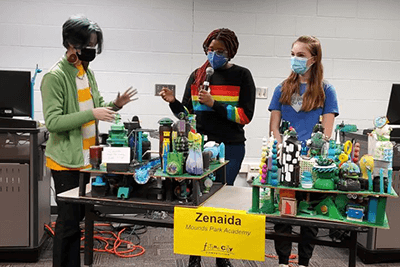
A huge congratulations to our eighth grade Future City participants! MPA, in its third year of participation, had our best showing yet!

This year’s competition entailed the same elements: a 1500-word essay in collaboration with their English class, a physical model of their city, and a presentation. However, the problem that students must solve changes every year. The challenge that students faced this year was to build a waste-free city. This theme was heavily inspired by nature and its circular processes, in which one organism’s waste is another organism’s food. The modern human world, however, operates in a linear fashion that follows a path of taking natural resources, creating products to use, then discarding them–from water bottles to clothing. While recycled materials are becoming more popular, today’s approach does not have a productive way to capture most of the limited resources and materials that our trash is composed of. This unfortunately causes pollution and many other issues for humans, the animal kingdom, and the world’s natural processes. This challenge serves to cultivate young minds to build a progressive, healthier world.

Below are summaries of this year’s awards:

Zenaida: This Future City won third place overall in the state of Minnesota, Best Infrastructure/Commercial Layout, and Best Age-Friendly City! The team was composed of MPA eighth graders Izzy V., Andrea P., Abby M., Teagan O., Ansel S., and Rosie B. During questioning, Izzy commented on how Andrea and Abby are new students to MPA this year and how the process of bringing them into the MPA community was special.

La Citta Del’Acqua: This Future City was made by Liam K., Truman W., Coba D., Boyd M., Matt T., Amelia V., and Roman S. This group won Best Essay in Minnesota and Most Innovative City Setting!

Greenwaters: This group was composed of Mina K., Zara G., Samantha G. , Amy X., Liam M., and Nellie L. Their ‘Greenwaters’ City won Outstanding Future City Project Plan!

A special shout out goes out to the MPA teachers, staff, and mentors who assisted students with writing their essays, providing information on sustainable food, ecosystems and waste-free programs, and model-building. Project-based learning takes immeasurable amounts of time, planning, commitment, and collaboration. The world is in good hands with these kids in the future!

We thank the following professionals for being mentors and judges,

Mentors:
Chris McLaughlin–Retired 3M Executive
Aimee Pearce–Medical Doctor
Olivia E. LeDee, Ph.D.–Acting Federal Director, U.S. Geological Survey, Midwest Climate Adaptation Science Center
Doug Galler–Architect
Mike Darrow–City Planner, Maplewood

Judges:
Lisa Vale
Joseph Pugh
Kate Johnston
Paula Tuebo Munkelwitz
Carol Bagnoli
Raphael Coffey
Scott Burnett
Salley Doherty
Meghan Masters
Bridget Mayer
9th grade Future City veterans: Alex Milam, Liam O’Keeffe, Rowan Mulroney, Ali Zuhayb, Zainab Lodhi


Meet Fourth Grade Teacher DeeDee Stacy

DeeDee teaching in the MakerspaceHow many years have you been at MPA?
Since 1989 I think…

What do you love about MPA?
Loving MPA is an easy thing to do. The students and their families are all in–and the love of learning and excitement the students bring to the table each and every day makes each day a new adventure. My colleagues are amazing educators, and their passion and pursuit of best practices inspires me.

How does MPA inspire students who dream big and do right?
Young children naturally dream big, and want to do right. Inspiring them to do just that, then, is easy. Modeling intellectual curiosity, respect, and critical thinking allows our students to maintain the part of themselves that expects the best of others, and to seek paths that bend toward right.

If you have worked at another school, how has your experience at MPA been different?
Two major differences between MPA and other schools I’ve worked in were evident by about my third week at MPA. One was that teachers truly partner with families in order to support students in academics, the arts, and personal growth. The other, of course, was the students. One lesson I introduced as a middle school English teacher required students to illustrate a piece of writing. In other schools, this requirement was met with groans, complaints, and poorly completed work. At MPA, when I introduced the project, hands shot up, as they had in other schools. I braced myself for the onslaught of questions and complaints. Instead, students asked what medium they could use. They wondered if pencil renderings would work, or if water color might be better. They discussed with me, and amongst themselves, how one might choose different ways to illustrate work depending on the content of the piece of writing. Magical moments like that are commonplace at MPA. Read More


A Culture Of Respect, Equity, And Belonging

from Dr. Bill Hudson, Head of School

This is the third of a four-part series of Head’s Messages that dives deep into MPA’s new strategic plan, 2024ward. Today we will outline this priority: Ensure an equitable and inclusive community. The second article may be found here. An overview of 2024ward may be found here.

It is not by accident that my article this week highlights the second priority of our new strategic plan. “The time is right to do what is right,” said Martin Luther King Jr. in a speech at Oberlin College on October 22, 1964. In the midst of a particularly violent year and in anticipation of the election, Dr. King noted that while behavior cannot be legislated, it is none the less crucial to protect dignity and lives of African Americans. Fifty-seven years later, our society continues to grapple with not just individual acts of racism but institutional and structural racism that deprives Black, Indigenous, and people of color from realizing the fullness of their humanity.

Since the founding of MPA in 1982, our school has been committed to embracing diversity, seeking equity, and continually striving to be profoundly inclusive. It has been a national leader among independent schools, well ahead of its time, in areas such as sexual orientation and gender identity. As a community, we have focused on fostering a safe and inclusive space for all, aspiring to be cognizant of gender identity and equality, religious understanding, socio-economic diversity, multicultural awareness, and racial diversity of students and staff. Equity, justice, and inclusion are embedded in our mission statement and are key in preparing our students to learn, live, and thrive in an increasingly diverse world.

While I am proud of our historical commitment to diversity, equity, and inclusion at MPA, I also acknowledge the pain and trauma some of our students of color endured at MPA over the last forty years and continue to experience now. To say that MPA is a safe, inclusive community is authentic and it is also inspirational and aspirational. We are in the middle of great societal change and along with change comes periods of uncertainty, disruption, and discomfort. Nonetheless, we as a community must re-commit ourselves to actions and values that demonstrate a culture of respect, equity, and belonging.

In the fall of 2020, I formed an Antiracism Action Group to engage the MPA community in reflection, advocacy, and action to dismantle racism in our school and in the larger community. Composed of students, parents, alumni, faculty, staff, and trustees, the Antiracism Action Group met throughout the year and recommended a series of concrete steps to be taken to address institutional and individual bias and racism in our school. The recommendations were accepted by the Board of Trustees last year and serve as the foundation of this pillar of our strategic plan.

The work of implementing this priority is the responsibility of all members of our community. 2024ward calls for a balance of both immediate, short-term actions with longer-term strategies. To drive this important work and to hold us all accountable, the MPA Board of Trustees established a board level Equity and Belonging committee. The Equity and Belonging Committee will engage the larger MPA community to create a multi-year comprehensive action plan with quantitative metrics. Goals include expanding diversity throughout the MPA community including in our leadership, governance, faculty, staff, and student body and enhancing the capacity of faculty and staff to address instances of individual and institutional racism.

Work has already begun in several areas. For instance, the administration has been reviewing and improving our hiring process so that we are better able to attract high quality teachers and staff of color. Planning is currently underway for a comprehensive curriculum review to take place next year that includes ensuring that both content and delivery are centered on equity. In a new initiative this year, all employees are meeting monthly in small groups to build belonging, foster trust, and cultivate empathy so that authentic, meaningful, and ongoing diversity, equity, inclusion, and justice work can be done to strengthen the MPA culture and community.

Mother Teresa once said that, “If we have no peace, it is because we have forgotten that we belong to each other.” As one independent school trustee said, “I’m talking about the kind of ‘when you feel pain, I hurt; when you feel joy, I smile’ belonging, going beyond the ‘let’s ensure that everybody participates in the trip to Italy’ kind of belonging that society might be more apt to take on within schools. It’s a “if I hurt you, I hurt everyone, including myself” kind of belonging. The work of diversity, equity, and belonging at MPA is a recognition that all of our fates are intertwined, and we can never be whole if we are unable to see and honor the humanity of others.
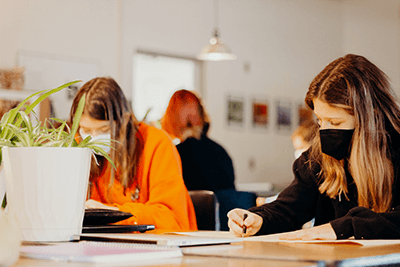

MPA Connecting for Understanding: An Open Dialogue about Neurodiversity

The MPA Parents Association invites you to Connecting for Understanding: An Open Dialogue about Neurodiversity.

Do you think there is a “normal” brain? What does that mean? Or does having a “normal brain” simply mean having a brain that functions well within the given structures of our current systems? As parents, how do we talk with our students, when they, or their classmates, don’t have brains that fit within the parameters of “normal” learning or “normal” classroom behavior? What does it mean to be neurotypical vs. neurodiverse? How do we discuss these topics with accurate information and compassion to create understanding within our school community?

Please join us as we welcome Pediatric Neuropsychologist, Dr. Jonathan Miller, on January 27, 6:30-7:45 PM for an interactive dialogue about neurodiversity and the many ways in which our children learn. This event is for Lower, Middle, and Upper School parents.

This is the first in a series of community-building open dialogue events hosted in partnership between the Parents Association and MPA. Upcoming webinars will cover issues around race and LGBTQ+ topics. Please join in the conversations!


January Parents Association Events

Parent Education Night
Save the Date for a Zoom Parent Education Night! January 27, 6:30-7:45 PM. Please join MPA families to learn about neurodiversity in our school community.

Faculty and Staff Appreciation Week
January 31-February 4. Keep an eye out next week in the Panther Post for a Sign Up Genius and more details. Contact Tara Lafferty with questions, TMattRN@aol.com or 201-563-4622

January Walks with Dogs
Join Michelle Mick Friday, January 21 & 28 for a walk in a local dog park. Bring your dog or not, we’ll meet at Battle Creek Dog Park, a lovely, big, off-leash dog park with 35 acres at 8:15 AM. Parking is off Upper Afton Road, in the parking lot next to the dog park. Look for Michelle and her dog (Rufus), near the entrance of the dog park.

For your GPS, the address is: 2350 Upper Afton Road, Maplewood, MN 55119. The contact person is Michelle Mick, and please feel free to SMS or call 651-328-7312 if you can’t find us!

Attention Middle School Panthers and Parents
The annual Middle School Café is going tubular this year! Stay tuned and get excited. While we can’t unveil all the details just yet (sorry!), we can say, SAVE THE DATE, Friday, February 25th from 2:30-5:30 PM.

Microfunding Grants
Looking for Microfunding for your club or classroom? It’s not too late to apply for these PA grants. Please send your applications to Natalie King, our micro-funding chair at natalieking10414@gmail.com. Applications can be found here.


Science, Art, And Character Intersect In The Makerspace

students beginning to design their facesIf you are familiar with MPA, then you are probably also familiar with the AnnMarie Thomas Makerspace. Electrifying in its concept and its form, this area of the school houses the intersection of creativity and innovation. The Makerspace is the physical manifestation of MPA’s long-standing belief that learning should be hands-on, experiential, and joyful.
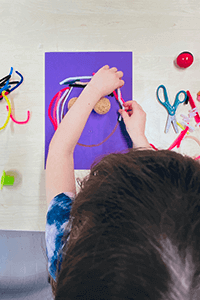
Keith Braafladt, MPA’s technology and innovation teacher, has already found himself right at home in the Makerspace during his first year as a faculty member. As a new friendly face on campus, Keith has dedicated this year to developing strong relationships with MPA teachers to integrate and deliver the best Makerspace curriculum and experience to our students. Curriculum that exists in the Makerspace connects liberal arts thinking with 21st century skills and competencies, providing students with opportunities to construct meaning through making via practical, hands-on, interdisciplinary, and problem-based projects. Most often, the work is centered around the design thinking process, a systematic way to solve real-world problems that major corporations use in the workplace.

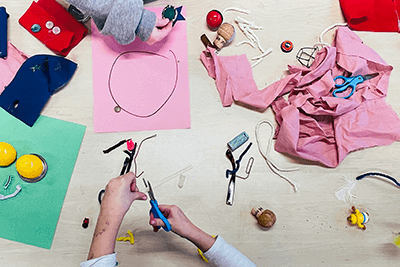
student laying out a faceOne of the most memorable projects to occur in the Makerspace this year is still adorning the outer windows of the room, prompting those who pass by to pause and share a smile that is reflecting back at them. The activity was informally and aptly named “making faces,” because that is precisely what Lower School students did. Essentially, they observed, looking for faces out in the world. And under Keith’s model, the idea was to use all of the donated, found, and collected materials at the students’ disposal in the Makerspace to create a face out of everyday objects themselves. Keith has friends at the Exploratorium in San Francisco that have been doing a similar activity that inspired this one. Read More