We’re Staying In, Not Walking Out

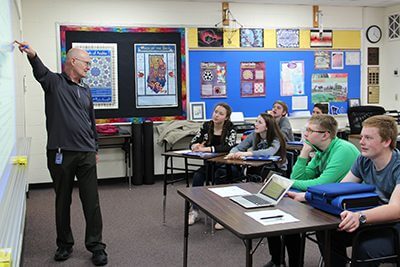
MN Senators on campusby Dr. Bill Hudson, Head of School

Our hearts have been heavy since the tragic school shooting in Florida last month. At the same time, we have been filled with hope witnessing young people around the world use their voices to ask for safer schools and less gun violence. MPA asks students to think critically and solve creatively. We ask them to dream big and do right, and that is exactly what we are seeing today’s young people do.

Having just returned from the National Association of Independent Schools Annual Conference, school violence and student safety were frequent topics of conversation. Across our nation, independent school leaders agree that civil discourse, social justice, inclusion, and equity are all important aspects of the complex society in which we live and our students have an important role to play in that.

This week will bring student-organized events around the world, including a significant walkout in protest on March 14 from 10-10:17 AM. I am writing to share how MPA will approach this time and the entire week at each division level and as a PreK-12 community. As always, the safety of our students is a paramount concern and for that reason, students will not be allowed to physically “walk out” of the building at any division level. Guided by our school’s mission and core values, students, teachers, and the administrative team have come together to ensure that every student will be appropriately empowered and respected this week. Together, they are viewing this as another opportunity to inspire students to identify problems in our community and world, use their values and knowledge to address them, and develop the confidence and courage to challenge the status quo.

Upper School

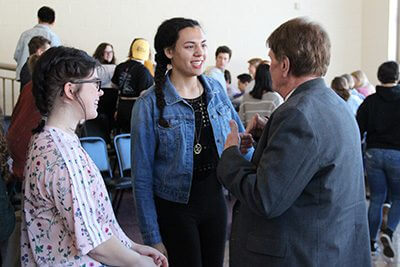
Student leaders are planning a week of action in Upper School. To get the conversation started, on Tuesday, March 13, students organized a Town Hall meeting with Minnesota State Senators Mark Johnson (R) and Chuck Wiger (D). They share, “We would like to use this opportunity to facilitate a meaningful discussion between students and bipartisan policymakers about how we can work together to keep our schools and communities safe, and to hear from a variety of viewpoints on this issue.” This is an optional event that will be held in the Recital Hall from 11:30 AM-12:15 PM.

On Wednesday, March 14, instead of walking out, Upper School students organized an opportunity to stay in and participate in 17 Minutes of Action from 10-10:17 AM followed by a student-facilitated debrief from 10:20-10:30 AM. Stations in the Commons will allow students to write postcards and make phone calls to their legislators and, for those who turn 18 before November, register to vote with the League of Women Voters. This will be a time for students to share their own personal perspectives and privacy will be possible during the phone calls. The debrief will allow student leaders to share the inspiration of the event, the goal for what their peers and they hoped to achieve, and they will also hold a moment of silence to honor the lives lost in the school shooting at Marjory Stoneman Douglas High School in Parkland, Florida. Classrooms will be open for students who do not wish to participate so that they may engage with the topic and each other in their own way. Time for the 17 Minutes of Action and the debrief is being made possible by an adjustment to the schedule that day. The campus will be considered closed for seniors during the walkout time.

To conclude the activities of the week, on Thursday, March 15, the Social Consciousness Club meeting will offer students a time to process the week and think ahead to how they may continue taking action.

Please note that all of these activities have been organized by Upper School student leaders. They have been exceptionally respectful of their classmates, teachers, and administrators and kept in close touch with them throughout the planning.

Middle School

This is i-Term week in Middle School, a very special time when each student is engaged in an inquiry-based, experiential learning opportunity of their own choice. Many of the i-Term classes are venturing off campus for all or part of the week and all classes have robust schedules planned. For that reason, the Middle School is not offering any activities related to this topic.

However, one Middle School i-Term class, “Social Change: Discovering Your Voice,” will attend Wednesday’s 17 Minutes of Action in the Upper School because the subject matter of the class is an appropriate fit. Students may choose to be participants or observers. In addition, this class will explore the National WalkUp Movement that calls on students to “Walk up to someone who has different views than you and get to know him/her. Walk up to 14 students and three teachers and say something kind. Honor the lives of those lost by walking up, not out.” This movement aligns well with the Middle School Mind-Person-Action character education program and is developmentally appropriate for this age level.

Lower School

The Lower School will also take a developmentally appropriate approach to the week, recognizing that this topic may be unsettling to students at this age. Ms. Wright, Lower School director, will recommend specific picture books for teachers to read aloud throughout the week to reinforce CHAMP themes such as inclusiveness, courage, responsibility, and compassion. All of these themes allow students to consider their own role in making positive change and encourage them to use their voices for good in our world.

PreK-12

Finally, I would like to share some ways that the administrative team is taking action this week. One way that MPA provides a physically safe school is by staying in close contact with our community partners and we have two examples of that planned this week:

  • Lonn Bakke, our School Resource Officer from the Maplewood Police Department, will attend our administrative team meeting on Tuesday, March 13 to engage in a conversation related to school safety. This will be a time for us to ask questions about our current procedures and identify action steps to continuously improve.
  • Shawn Conway, the Maplewood Fire Department battalion chief of operations and training, will be on campus to debrief about the gas event on Friday. While the event went exceptionally well, every opportunity to engage our emergency plan offers lessons learned and working with Chief Conway will allow us to best identify those.

I would like to close by sharing that I am exceptionally proud of the way this week is being approached here, guided by our mission and values and with a commitment to inclusion and civil discourse. Our world desperately needs more engaged, educated, and empowered citizens who are dedicated to improving it and that starts at Mounds Park Academy. Our students dream big and do right every day and will continue to do so long after this week concludes.

Easing The Transition

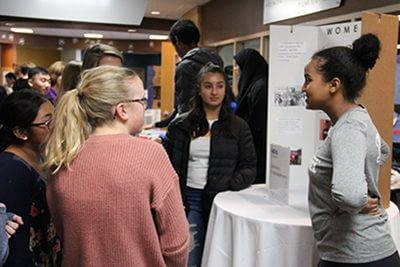
Opportunity fair in Us commonsby Mark Segal, Upper School Director

Editor’s Note: On the first Thursday of each month, you will now find a guest blog post here from one of MPA’s division directors. We hope you will enjoy reading their stories and reflections about life at MPA!

The transition from middle to high school can sometimes be difficult. It is an awkward time when students may fit in right away, or feel like outcasts. Parents and teachers may seem like they are harping at them about the smallest things, and they may feel as though they have no similarly interested peers with whom to connect. What students might not realize–and is our responsibility to point out–is that Upper School offers new and exciting opportunities that are ready and waiting for them to explore.

Read More


Meet Mr. Ethier

Math teacher with middle school studentsMiddle School math teacher

How many years have you been at MPA? 27

What do you love about Mounds Park Academy?
The students. Every day I get to work with students who are curious, motivated, eager to learn, and willing to do the hard work to solve challenging problems. We talk about the joy of learning, but it’s a joy to work with students like this! As a coach, I get to hear positive things about our students from others they encounter. It might be the neighbor who noticed some of our runners stopping to pick up trash at Goodrich, or the bus driver who always looks forward to driving MPA students because they’re the best.

How does Mounds Park Academy nurture students who forever dream big and do right?
One of the really important things we do is create an environment where students can be themselves. Each student is unique, but each student feels right at home at MPA. Here, it’s cool to be smart, cool to be a math nerd, a drama nerd, a speech nerd, or whatever type of nerd allows you to explore your passion. That welcoming environment is critical to allowing students to have those big dreams and sets an example they can carry on to welcome others.

If you have worked at another school, how has your experience at Mounds Park Academy been different?
I only worked one year at another school—a public school in northern Minnesota. It was like night and day comparing that experience to my experience at MPA. I remember giving a simple problem solving assignment to one of my classes and the students had no idea how to approach it. Nobody had ever asked them to do problems like that before! MPA students jump right in when given those kind of challenges. They’ve been given many opportunities to do open-ended, problem solving, creative activities, and they don’t back down from a challenge.

What would you tell a parent considering Mounds Park Academy?
At MPA, we ask students to solve challenging problems and give them the support they need to be comfortable doing that. Whether it’s solving interesting algebraic problems in sixth grade, writing a novel in seventh grade, doing a research paper in eighth grade, we ask a lot of our students, but we also provide the nurturing environment that helps them feel safe in taking those academic risks. Read More


Incredible Summer Drama Opportunities

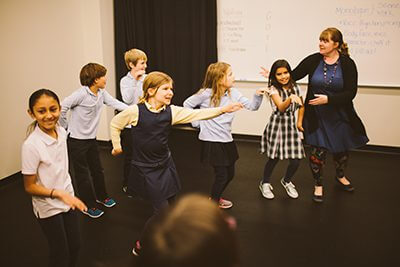
heather teaching dramaby Heather Mastel, MPA drama teacher

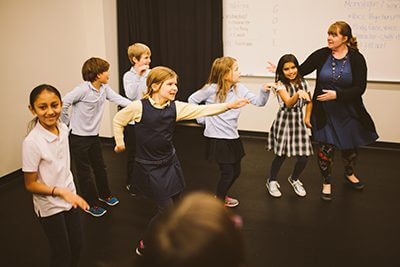
One of the reasons I love teaching drama is how it resonates with children. There is movement, humor, and creativity. It also teaches collaboration, communication, empathy, reflection, and problem-solving skills for creative challenges. I am excited to bring these learning opportunities to Summer at MPA! Children in Beyond Drama Class will create their own short play, while Beyond Acting! gives lower school students the chance to design, write, and choreograph. The One Act Drama Camp will challenge middle schoolers to rehearse and perform a one-act performance in just one week. We will also go see “Shrek Jr.” and tour the Guthrie Theatre.
For more information about these incredible drama classes and so many other opportunities, visit moundsparkacademy.org/summer. Next week in Panther Post, we’ll share much more about our brand-new summer musical program!


Parent Education With Dr. Jules Nolan

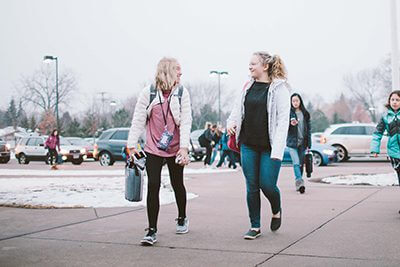
middle school girls walking into schoolThe MPA Parents Association invites parents to attend two upcoming talks by Dr. Jules Nolan. Please note that these talks are open to all MPA parents, not just Middle and Lower School. However, the Wednesday discussion will be geared toward Middle School families, so while all can attend, the content will be focused on that age group’s developmental needs.
The Middle School Parent Event is Wednesday, February 21, from 8–9 AM in the Porter Conference Room. Dr. Jules Nolan will present “Social and Emotional Learning: A Better Predictor of Success in School.” This session will explore social and emotional learning, a skill set that is foundational in learning and life, and is currently the focus of new standards and benchmarks from the Minnesota Department of Education. Participants will better understand the five areas of SEL skills and how to develop lagging skills in the areas of self-awareness, self-management, social awareness, relationship skills, and responsible decision making.

Read More


The Middle School is Full STEAM Ahead

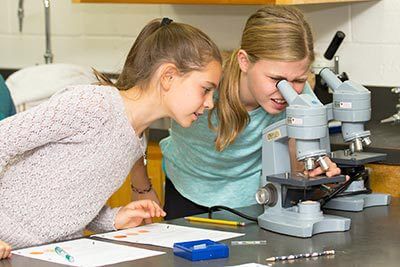
middle school students using microscope in labby Erica Brewinski, Middle School Director

“Birthday candle smell is hot rods lab!” I’m guessing that most people, upon seeing this message in the subject line of an email, would surmise that it is: a) spam, b) a link to a funny YouTube video sent by a coworker, or c) a line from a recent late night show. For me, and all of the faculty and staff who received that message on Tuesday, the message is further evidence that our Middle School students are highly engaged in a collaborative, hands on learning experiences.

Upon investigation, I indeed found sixth grade students clustered around lab stations, talking animatedly as they tested their hypotheses. Next door, the eighth graders were working in small groups on a problem-based activity that required them to study various factors to determine the best location for a research station in Yellowstone Park. Each group then had to give a five-minute pitch to an outside scientist. These types of project-based, open-ended learning activities include real world applications and use multiple 21st century skills, and they permeate our Middle School experience. MPA is helping students to dream big and do right; our students are actively engaged in their own learning, teachers are discovering ways to weave together content from many disciplines into projects, and our classrooms have seen positive changes with the addition of our one-to-one laptop program.

Read More


Faculty Explore the 6 Cs

The 6Cs at MPA with students doing projectThe academic emphasis on only reading, writing, and arithmetic is long gone; the emphasis today is broader and more nuanced than these foundational skills encompass. Some schools, including Mounds Park Academy, are even broadening the skills identified in the “21st Century Skills” movement, commonly known as “the 4 Cs” or critical thinking, communication, collaboration, and creativity, to include two additional Cs: culture and connectivity.
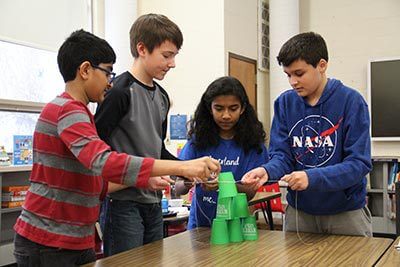
At MPA, we welcome the increased focus on these critical skills, because, as a progressive and independent school, we’ve been emphasizing them since our beginning in 1982. This was long before the 21st Century was in our public consciousness. We have known for 36 years that these skills are critical for students to become engaged, thoughtful, and informed global citizens who are able to use their deep content knowledge to make a difference in their communities, in our country, and in the world.

We asked six MPA faculty members from across our community to share how they develop the 6 Cs in their students:

Thoughts on Critical Thinking from Jason Schwalen, Upper School English

In the English Department at MPA, we are creating students who are not simply critical thinkers, but informed thinkers who are willing to use those critical thinking skills to confront and solve the problems our culture has carried throughout history…attaining justice, equality, equity, and inclusivity begins with education.

In order to move our culture in a positive direction, our students need to be informed readers, critical thinkers, and skilled writers, and we build these skills by analyzing authors and artists who have attempted to document and improve our culture. Examining these authorial perspectives—and writing about them—helps create a foundation that equips our students to assess, analyze, and tackle the challenges that accompany trying to change the world. Read More


Living Lives of Health and Wholeness

MS character mixerby Dr. Bill Hudson, Head of School

Today, Middle School students met in mixed-grade level groups to explore the character trait of perseverance, a core pillar of our Middle School Character Education Program. Each group collaborated to complete two separate challenges related to fostering perseverance and then processed their experience with their teachers. Learning from failure, working together, developing skills such as persistence and tenacity were all a part of the lesson, but in the spirit of MPA, there was also a lot of joyful learning taking place.

Character education is but one part of an overall Mounds Park Academy wellness program. The MPA Strategic Plan, Momentum 2020, has as its first goal, “Empower students to live, learn, and thrive in the 21st century globalized society.” Academic and career success are important and MPA provides students a rigorous and relevant curriculum. But as a school committed to educating the whole child, we also understand that in order to reach one’s full potential, students must also have the knowledge and skills necessary live lives of health and wholeness.

Mental illness and anxiety among young people are on the rise. For instance, by the age of 18, 15-25 percent of adolescents will have experienced a major depressive episode. We also know that suicide is the second leading cause of death for Americans ages 15-34. A recent New York Times article quoted research from the Higher Education Research Institute at UCLA that found the percentage of college freshmen reporting feeling overwhelmed rose from 18 percent in 1985 to 29 percent in 2010 and surged to 41 percent last year. These facts paint a grave picture—one that illustrates clearly how critical our work is in this area.

Read More


Fostering Citizen Scientists

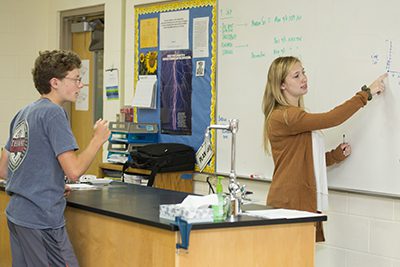
Student at board discussing science problemby Dr. Bill Hudson, Head of School

Just before break, the Washington Post reported that seven words were being banned from official documents being prepared for the 2018 budget at the Centers for Disease Control including “evidence-based” and “science-based.” The national conversation around “fake news” and questions about the veracity of climate change have placed science and science education at center stage. In addition, the steady drumbeat calling for more STEM education has ignited a passionate discourse about science education, particularly within a liberal arts education. In the midst of this often-polarizing discussion, I have repeatedly seen evidence that MPA does science ‘right’ by focusing on applied learning, critical thinking, and a grounding in fostering students to become citizen scientists.

The MPA science curriculum is founded on the principles of active and inquiry-based learning as first developed when the school was in its infancy. Our phenomenal science teachers continue to provide rich, thoughtful, experiences and opportunities for experimental design, while at the same time giving students the background and content they need to succeed in college and beyond. MPA students are encouraged to think critically about science by using their successes and failures in the lab as learning opportunities. What worked? What didn’t? How could it have been improved? Did it prove anything? These questions are best answered through learning by doing.

Read More


Meet Ms. Mastel

Drama teacher with her elementary classDrama Faculty
MPA Parent

What do you love about MPA?
So many things! As a teacher and a parent, I love that drama is part of the curriculum at MPA. It really shows the dedication of teaching the whole child. I also love that at MPA the “joy of learning” is imbedded into the school’s mission.

How is your child encouraged to dream big and do right at MPA?
My daughter is given options and choices for her own learning. She is taught skills that encourage independence, self-confidence, and advocacy. But the focus doesn’t stay on the individual—Lily’s teachers have projects that foster collaboration, team building, and simply being a good friend. During a recent “music share,” my daughter was nervous and forget her song … she looked at one of her friends who mouthed the first line and then Lily was ready to go. The next day, that friend began crying when a cookie fell to the ground at the school picnic and Lily immediately turned to comfort her. These are foundations that will last a lifetime.

If your child has attended another school, how has your experience at MPA been different?
Lily was originally enrolled at a different elementary school, until I was hired at MPA. I remember the moment during my tour when I started to look at the school as not just a potential teacher, but as a parent who wants the best for her child. She has more opportunities for physical education, art, drama, music, computers, and for creativity in the Makerspace. Many schools have cut art programs, meanwhile MPA has it as a required class through eighth grade. Also, the small class sizes cannot be beat! Read More