COVID-19 Parent Education Forum

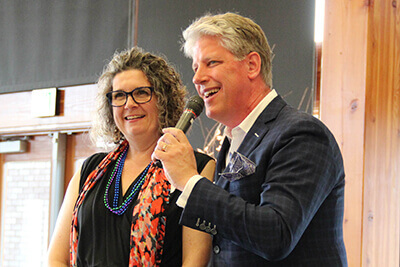
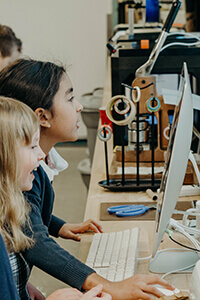
parent and middle school student talking togetherMPA is committed to supporting parents as well as students. You are invited to Parent Education Forum with Dr. Julene Nolan, MPA school psychologist, and head of school Dr. Bill Hudson. The Parent Education Forum is designed to provide parents with the support, guidance, and insights needed to navigate these difficult times.

Please click here to share questions and concerns that are top-of-mind as you begin to navigate supporting your children through the changes that are happening in our world right now. We will use this to craft our time together and guide how we deliver future parent support. An example might be a question, “How do I keep my kids from fighting all the time?” a specific topic, “Screen time rules”, or a suggestion, “Here is something that is working for us.”

Topic: Parent Education Forum
Time: Mar 31, 2020 07:00 PM Central Time (US and Canada)

Join Zoom Meeting
Meeting ID: 968 108 092
Password: 080517


Junior Hana Miller Celebrates Birthday With Blood Donation Campaign

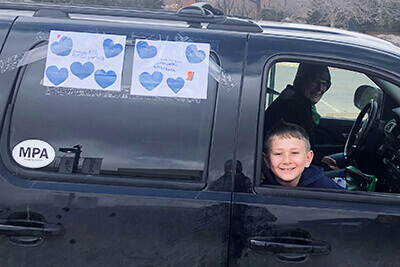
MPA blood drive postersHana Miller has always been, and continues to be, a vocal advocate for blood donation. Amidst the severe blood shortage in the Twin Cities, which continues to suffer from the spread of COVID-19, Hana is doing right and organizing a blood donation campaign for her birthday this year.

“I’ve donated five times–the first on my 16th birthday–and passed out every time,” she said. “In fact, It was because of the tests that the Red Cross runs on their blood donors that I discovered that I was anemic. An average person should have a blood iron level around 16 and mine was recorded at a three!” After finding out she was ineligible to donate herself, Hana finds herself even more motivated to bring an awareness to blood donation.

The spread of coronavirus has forced a decline in the number of blood drives and donors in the United States “This is actually no surprise, considering the nearly 60% of the US Blood supply comes from donors over 45,” Hana stated. “This means that while the demand for blood has remained the same, possibly even increasing, our ability to meet that demand is decreasing. So considering I was stuck in my house for my birthday, and unable to spend the day as I wanted, I figured that the next best thing I could do was to try to help someone else. I decided to set up the donation campaign through the Red Cross.” Read More


MPA Goes Virtual: Isak Dai

isak daiThis story series illustrates how our community is embracing, growing, and connecting through virtual learning together. Read on to see what MPA junior Isak Dai looks forward to as #MPAgoesvirtual!

While virtual learning may look and feel different than a regular school day, Isak breaks it down in a way that makes it feel very familiar, even away from campus–to him, virtual learning is “bundling up the work we do at school and doing it at home through the internet.”

“Before our current situation, we certainly were practicing some aspects of virtual learning by accessing online resources like Schoology, but now have been forced to take all of MPA online,” he said. “My hope is that through this challenge we can learn to take advantage of the many virtual learning resources at our disposal and take these lessons with us when we eventually return to school as usual.” Read More


When To Let Your Child Choose: Advice From A Parent In Making A School Decision

upper school students using makerspace whiteboard togetherYou are looking at school like Mounds Park Academy because you want the best for your child. You want your child to grow into a free spirit, a risk taker, a right maker, dreamer, and a doer. You want an independent thinker. Yet should your child, whom you have raised to be a respectful, decisive, critical thinker, make their own school choice? And what is your role, as the parent, in the school search process? This is a question that the Office of Admission is asked regularly.

Depending on the age and maturity of the child and the reason your family is changing schools, the continuum can range from a parent making the decision solo, to a combined decision making process, to the student selecting from the parent’s list of approved schools, to, in some cases, the student making the decision completely on their own. Where each family falls on this continuum is vastly different.

How Young Is Too Young?
Educational choices stick with a child for their entire life, so balancing the natural desire to provide a platform for your child’s input while knowing that what they decide has substantial implications on their future is critically important. The best parent-child partnerships blossom when both sides see this decision as a learning opportunity. Incorporating your child on this journey and welcoming them to contribute can be an incredible chance for them to develop maturity and show their growth. But as every child development expert will tell you, there’s a time and a place for a child’s choice, and there is a time when parents need to make the decision. Read More


MPA Goes Virtual: Kaija Kunze-Hoeg

Kaija Kunze at a volleyball gameThis story series illustrates how our community is embracing, growing, and connecting through virtual learning together. Read on to see what MPA sophomore Kaija Kunze-Hoeg looks forward to as #MPAgoesvirtual!

Kaija tells us that she is excited to try this new style of learning. “To me, virtual learning is a new, innovative take on what a classroom looks like,” she says. “I expect to have to learn to focus harder as I will have more things that can distract me when I am learning from home.”

Knowing this may be a challenge for her, Kaija is preparing to set up her workspace to help her stay on task and continue achieving academically. MPA recommends starting with a quiet, well-lit area with strong Internet connection and a clean, clear working space to continue joyful learning away from campus. “I am going to try to make my at-home ‘classroom’ pretty close to what it would be at school so I can feel more engaged in my classwork,” she says. “I will use a desk, but it will just be more cozy.” Read More


Lower School Virtual Learning Update

lower school student working on a laptopby Renee Wright, Lower School director

Over the weekend, you learned that our campus will be closed until at least Friday, March 27, in alignment with Governor Walz’s order. Since then, social distancing protocols have been put into place, restaurants, coffee shops, shopping malls, and many other businesses have closed. All of these sudden changes are likely causing concern and anxiety for you and your children. It is comforting to know that these decisions are meant to protect the well-being of our entire community and that learning will continue in new and exciting ways, due to the innovative technology we have available to us.

On Tuesday, March 24, we will begin to learn virtually in Lower School—this will allow students to experience continued instruction and community connection on a daily basis. Schoology will be your go-to source of information. You will receive a post by 8 AM each day from your child’s homeroom teacher with lessons, assignments, activities—some will be recorded videos and some will be independent work. You will also receive regular posts of a similar nature from your child’s specialists. We know that it is important for teachers and students to stay connected and they will also do that through “real-time” sessions according to the schedule below. We have learned from other schools that in Lower School it is very important to start simply and to partner with parents to manage the workload, knowing that many of you will be working from home as well. We are working hard to strike the right balance in Lower School and will adjust the schedule below if needed. I hope you will plan ahead and help your child get set-up on a home device to ensure they are part of these.

We believe it is important for students to have a quiet, dedicated place to learn and to follow a consistent and predictable schedule each day. In Lower School, we want to avoid children spending their entire day on a device, so we will not be following their typical schedule. Depending on the grade level, your teacher may provide you with an adjusted schedule or you will be invited to establish your own. Either way, combining time working on assigned learning tasks and opportunities to play and be creative sans a device will be strongly encouraged—students learn so much from play! An emphasis will also be placed on spending time together as a family doing activities such as reading, playing games, cooking, and/or taking walks. These are all opportunities that create the emotional support young children need during this time. Read More


Kindergartners Discover The Joy Of Learning

ms. Petersen working with two kindergarten students in classAt Mounds Park Academy, a private school in Saint Paul, the words “kindergarten” and “joy” are inseparable. And it doesn’t matter who’s describing the experience. When asked what she loves about teaching kindergarten, MPA’s Kristine Petersen said immediately, “Pure joy!” While Petersen didn’t specify if it was her joy or that of her students, it’s clear from a parent’s feedback that it’s both.

“Our daughter seems so committed to school because of her joy for it, which is the goal. She not only believes in the joy of school, but she trusts in the joy and excitement Ms. Petersen brings to learning and to the classroom!”

Introducing Mounds Park Academy’s Interdisciplinary Approach in Kindergarten
Educational experiences are more authentic and of greater rigor when students learn through an interdisciplinary approach—it is deeper and more reflective of the real world. Interdisciplinary teaching helps students make connections among math, science, social studies, language arts, and fine arts, integrating knowledge and increasing student engagement.

MPA introduces its interdisciplinary approach in kindergarten in an age-appropriate way. When students study the letter “R,” for example, they might complete a mystery puzzle revealing a rabbit by following teacher directions and coloring a mystery grid. The teacher references shapes such as triangles, diagonals, and rectangles as part of the directions. The students then create a math problem with the puzzle. Read More


MPA Alumni Left Their Mark!

lower school students hold up thank you for alumniThe MPA Alumni Day of Giving on March 3, 2020 was dedicated for alumni to show their continuous Panther Pride and support for MPA students, faculty, and staff. MPA alumni and parents of alumni rallied together yesterday to raise an incredible $40,692 in support of students and teachers! A total of 106 alumni and parents of alumni made a gift, and the Classes of 1991 and 2004 tied with 20% class participation. Their gifts ensure students can receive:

  • Scholarships and Financial Assistance: MPA prides itself on its diverse and inclusive community. Help us to ensure that Panthers from all backgrounds can benefit from a life-changing education. Your gift will support the more than $2 million in financial assistance MPA provides to families each year.
  • Programmatic Enhancements: Thanks to the AnnMarie Thomas Makerspace, experiential learning opportunities, a robust performing and visual arts program, and no-cut athletics, MPA offers a whole-child education for an ever-changing world. Your gift will help us to continue to provide top-notch educational opportunities across these important academic content areas.

Read More


Why Interdisciplinary Education Works

upper school students having social studies class discussionby Mark Segal, Upper School director

Editor’s Note: On the first Thursday of each month, you will find a guest Head’s Message here from one of MPA’s division directors. We hope you enjoy reading their thoughts and reflections about life at MPA.

When I was in second or third grade, I defined mathematics as something I did daily from 9:45–10:30 AM. My focus should have been on the addition and subtraction problems written on the blackboard or mimeographed handout, but instead it was on the upcoming recess where my friends and I played competitive games against one another. Educators rarely explain to students and parents why the school day is designed as it is. It should be no surprise then that students and parents look at the arbitrary divisions for English, math, reading, social studies, world language, science, art, music, and physical education and begin to define the subject areas as separate bodies of knowledge with little connection to one another.

As I moved into middle and upper school, the subject matter separation became even more noticeable as the academic areas were forced into independent time frames taught by individual teachers. It is no wonder that many middle and upper school students (including me 35+ years ago) complain that school is irrelevant to the larger world. In the real world, we do not wake up in the morning and do social studies for a specified time block. Over time, adolescents begin to recognize that in “real life” we encounter challenges and situations, gather data from a number of resources, and problem solve to generate solutions. The fragmented school day does not reflect this reality. Read More


Join Us For Book Festival!

students at book festival 2019Save the date and spread the joy of reading! The MPA Book Festival is April 20-22 and is open to all students and families. Book Festival Family Night will be held April 22, 3-6 PM. Come join us for an evening of crafts, activities, dinner, and of course an opportunity for book buying! Our theme is “MPA ComicCon.” What that means is that in addition to having a wide variety and assortment of books for sale, we will also have a specific focus on Graphic Novels and Comics. Did you know that a Graphic Novel won the Newberry Awards for the 2020 for the first time ever? And we chose our theme way back in 2019!

Contact Erin Dimopoulos at erindimopoulos@gmail.com to get involved! We are looking for volunteers to help with crafts, activities and decor.